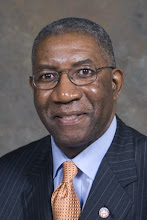
There is a troublesome and troubling silence within the religious community concerning the current U.S. healthcare insurance reform debate. People of all faiths, backgrounds, political beliefs, and education levels are challenged daily to obtain and keep affordable health insurance. Reports about health insurance industry abuses—such as "rescission" where insurers terminate coverage and refund premium payments to customers who are diagnosed with chronic or life-threatening illnesses covered by their policies—are well known to everyone, including religious leaders. However, religious leaders and groups have stood silently on the sidelines.
As a Christian minister, I find this situation troublesome. The Bible is full of lessons about healing, health, and compassion for wounded and diseased people. Jesus Christ made healing an integral feature of his ministry. One would think that Christian pastors would be active thought and action leaders concerning the health insurance reform debate. What could possibly be harmful about teaching and leading our congregants and the wider public about this issue?
Because healing is integral to the redemptive ministry of Jesus Christ, it is also troubling if Christian ministers will not recognize the obvious moral implications surrounding the current healthcare insurance system and the need to reform it. It is troubling that religious leaders of all faiths and creeds are not actively determined to make health care affordable and available to every person in this society. The people who should be providing moral leadership concerning this life and death issue are conspicuously shirking our responsibility.
I urge the congregation I serve to be engaged in the healthcare reform debate, and openly favor a publicly-financed program to cover any person who cannot afford insurance in the private market or who may prefer coverage under the public program. Private insurers are interested in charging whatever people will pay while providing as little insurance coverage as possible. The private insurance industry hopes the current healthcare reform movement will require Americans to obtain health insurance and produce millions of new customers. Without a public option, all Americans, and especially the most vulnerable, will be at the mercy of the industry's pricing and delivery practices.
The public financing option for healthcare insurance reform is a moral and civil rights issue. A fair society does not force people who become ill and wounded to depend on the avarice and greed of the market place for their care. Religious leaders should demand that President Obama and Congress include a strong public option as part of healthcare insurance reform. After all, we are constantly confronted with the realities and injustices associated with the existing system.
In this regard, I am struck by what Walter Rauschenbusch, regarded as the father of the Social Gospel movement within 20th Century Christian thought, wrote in his landmark work titled Christianity and the Social Crisis, published in 1907.
"Few churches have the resources and leadership to undertake institutional work on a large scale, but … all pastors who are at all willing to do it have institutional work thrust on them. They have to care for the poor… This is the stake of the churches in modern poverty. They are buried at times under a stream of human wreckage… They have a right, therefore, to inquire who is unloading this burden of poverty and suffering upon them by underpaying, exhausting, and maiming the people. The Good Samaritan did not go after the robbers with a shotgun, but looked after the wounded and helpless man by the wayside. But if hundreds of Good Samaritans traveling the same road should find thousands of bruised men groaning to them, they would not be such very Good Samaritans if they did not organize a vigilance committee to stop the manufacturing of wounded men. If they did not, presumably the asses who had to lug the wounded to the tavern would have the wisdom to inquire into the causes of their extra work."
My congregation holds me accountable for what I say and do concerning the moral implications of public policy issues. More importantly, God holds us accountable for what we do—and for what we fail to do—to provide fair and adequate healthcare for every person in our society, including people who cannot afford it. This is a fundamental issue of social justice. Shame on religious leaders and congregations if we avert our eyes and pass to the other side of the healthcare insurance Jericho Road while millions of bruised and robbed people suffer.
Monday, October 12, 2009

Sunday, September 13, 2009
The Content of Our Character
THE CONTENT OF OUR CHARACTER
2009 State NAACP Banquet Speech
Little Rock La Quinta Hotel
Little Rock, Arkansas
September 12, 2009
© Wendell Griffen, 2009
PRESIDENT CHARLES, SECRETARY CHARLES, OTHER OFFICERS AND MEMBERS OF THE ARKANSAS NAACP, LADIES AND GENTLEMEN:
Thank you for inviting me to participate with you in this banquet. I am glad to be here for several reasons.
First of all, I respect the great work that the NAACP has done and continues to do to advance civil rights in this society. Pollsters and politicians often behave as if the cause of civil rights—meaning liberty and equality—is no longer worthy of our attention. The NAACP does not suffer from that delusion. This organization continues to function as a sentry and guardian about the precious rights and freedoms that every person in our society is entitled to enjoy. The NAACP has not gone to sleep. You have argued, raised the alarm, and condemned the policies and politics of those who seek to turn the clock back on liberty and justice. I am here tonight because I respect the work you have done and the work you are doing to protect the freedoms that are the bedrock of our society, and to resist those who would deny those freedoms to others without just cause.
Secondly, I am here out of a deep sense of gratitude to the Arkansas NAACP. My wife, Dr. Patricia Griffen, and I recall that we were with you in 2005 during the annual banquet that occurred on the campus of the University of Central Arkansas at Conway. My remarks during that banquet speech—or I should say a summary of those remarks in which I criticized the shameful and fumbling way the last Bush administration responded to Hurricane Katrina, among other things—appeared the following day in an issue of the Arkansas Democrat-Gazette newspaper. Despite the plain wording of the First Amendment, a 2002 decision by the U.S. Supreme Court, and a 2003 decision by the Arkansas Supreme Court, a misguided state agency spent the next two years prosecuting me because of those remarks. The NAACP and other persons and groups that love liberty and respect freedom of conscience and speech encouraged me and my family over the next two years as I fought the charges and eventually forced the Judicial Discipline and Disability Commission to dismiss them. I will forever cherish the fellowship and encouragement you gave me during that ordeal.
Let me speak now with you briefly from the subject, "The Content of Our Character." You may recall that during his historic "I Have a Dream" speech in 1963 to the multitude assembled for the March on Washington before the Lincoln Memorial, Dr. Martin Luther King, Jr. openly dreamed of a day when his children would not be judged by the color of their skin but by the content of their character. Years later, Shelby Steele appropriated—some might argue that Steele misappropriated—those words for the title of a book in which he questioned and criticized affirmative action remedies. And, public speakers whose views run the political and social spectrum have used King's words to support their remarks.
Tonight I invite you to consider the possibility that King's words might still be relevant concerning to the plight and potential future of American society, especially when one considers what is happening now.
• What does it say about the character of a society that prefers a vice-presidential candidate who could not name a single decision of the U.S. Supreme Court with which she disagreed when asked during an interview (former Alaska Governor Sarah Palin)? What can we deduce about the character of Americans in Arizona, Arkansas, Alabama, Georgia, Kansas, Kentucky, Louisiana, Missouri, Mississippi, Oklahoma, South Carolina, Tennessee, and Texas, based on their 2008 preference for Ms. Palin as Vice President? Ms. Palin is writing her memoirs. It is reasonably certain that she will pursue a national political role. What does it say about the morality and character of people who embrace her notion and history of leadership?
• What does it say about the character of a society that professes on one hand to invite the tired, poor, huddled masses who yearn to breathe free to its shores, judging from the message on the Statute of Liberty, yet would openly endorse denying healthcare at public expense for undocumented immigrants who may be sick or dying? Where is the "Good Samaritan" ethic found in that? What is decent, moral, generous, compassionate, or even Biblically sound about it?
• What does it say about the character of a society when a police officer sworn to uphold the Constitution of the United States is defended by other public officials after he arrests a black man standing in his own yard because the black man accused the officer of behaving in a racist manner? What does it say about the character of that officer, whose official report of the incident falsely claimed that he was responding to a report of two black men attempting to force open the door of a house when the actual report was of two men whose racial identities was not disclosed? What does it say about the police department that makes such an officer a leader on diversity and cultural competency issues?
• What does it say about the character of a society that will support and re-elect a president whose administration failed to detect and prevent two dozen terrorists from taking over four passenger jets and using them as tactical weapons that killed over 3000 people, who used that failure as an excuse to start a war in Iraq, and whose administration supported torturing people during the course of that war?
• What does it say about the character of a society that will name federal buildings and an airport in the nation's capital after a man (Ronald Reagan) whose subordinates plotted an illegal war from White House basement offices?
• What does it say about the character of a society that prefers the imperial presidency of George W. Bush over the efforts of Barack H. Obama to bring people together across racial, ideological, religious, and regional lines?
• And what does it say about the character of a society when politicians and pundits who quietly watched a white president start a war that should never have begun, take the national economy to the point of ruin, and actually praise people who engaged in vicious and violent conduct, now openly denounce the motives and efforts of a black president trying to end that war, save the economy, and hold people who may have committed crimes during it accountable for their deeds?
The content of our character is on display when Russ Limbaugh can openly hope that a new black president (President Barack Obama) fails. It is on display when people in Arizona will carry loaded semi-automatic weapons to public events where the black president is speaking. It is on display when a white pastor and his congregants will pray to God for the death of the black president, and pray for his wife to be widowed and his children to be orphaned.
I am blessed by the friendship of Gardner Taylor, who holds the Presidential Medal of Freedom and is one of the most revered preachers of the Christian gospel in our era. Dr. Taylor is now retired and living in North Carolina. As Dr. Taylor and I were chatting this afternoon, he said something that struck me as both provocative and profound.
Taylor observed that it would be an ironic turn of history if this nation loses its place because of color. Obama has all the qualities that this nation has always claimed to recognize as required for greatness in its national leader, but one. He is blessed with a brilliant mind. He is photogenic, energetic, and thoughtful. He is an inclusive fellow whose personal history demonstrates a commitment to building friendships and helping others. His family history is a fitting example of all the hopefulness and determination that the nation has traditionally celebrated. Barack Obama, according to Gardner Taylor, has all the qualities that the nation and the rest of the world have always celebrated and respected for leadership of our society, except one. He is not white.
I trust that I am not the only person to notice that the people complaining at town hall and other public gatherings about wanting what they call "my country" back were not complaining about losing the country when a white president took it to war. They did not want their country back from a white president whose policies almost took the nation into depression. There was no outcry to retake the country from a white president whose policies allowed combat veterans who awaited medical treatment in Washington, D.C. to live in rat and mold-infested quarters.
These people did not demand their country back from a white president whose vice president had people exposing the identity of a covert intelligence official. They did not want their country back after the first 100, 1000, 2000, 3000, 4000, or 5000 service personnel were killed in Iraq, or after tens of thousands more were scarred and maimed, or after we spent close to a trillion dollars in that war. Congressman Joe Wilson of South Carolina never complained about the lies told by Scooter Libby, Alberto Gonzales, or other officials who worked for a white president. Arkansans did not demand their country back from that white president.
It is profoundly noteworthy that Americans will accuse President Obama of lying about healthcare. The people complaining about a public healthcare funding option promoted by President Obama seem to forget that Medicare, Medicaid, and the entire military healthcare system are supported by public money. Every public school, public library, public street, highway, and airport is supported by public money. It says something profound and provocative about the character of a people when they will vilify a black president for proposing a public healthcare option after driving along public roadways to town halls held in public buildings.
Congressman Joe Wilson of South Carolina, who accused President Obama of lying, enjoys healthcare for himself, four of his sons, and their families through free military medical coverage known as TRICARE. Congressman Wilson voted for the resolution to authorize the war in Iraq, yet voted 11 times against health care for veterans over the past eight years. He voted to cut veteran's benefits—but not his own—so that tax cuts could go to wealthy people. He even voted to cut funding to the Veterans Administration and repeatedly refused to support measures to extend TRICARE coverage to all reservists and National Guard members, despite the fact that many reservists and National Guard members have served multiple deployments in Iraq and Afghanistan and lost access to their civilian work benefits when they did so. That line of conduct provides a clear picture about character.
And it says something about the character of religious life in this society when preachers, priests, and other religious leaders will not address the profound and provocative proof that our character suffers from a cancer that glorifies white leadership however inept, incompetent, or corrupt it may be, but demonizes and demagogues black leadership no matter how well informed, patient, or effective it may be. I do not merely say this concerning white religious leaders. It is also true of black religious leaders. I have listened in vain to hear T.D. Jakes, Creflo Dollar, Eddie Long, Frederick Price, or many of the revivalists who criss-cross the nation speak on these things. Judging from their failure to do so, it appears that the spirit that inspired and impelled Amos, Micah, Daniel, Jeremiah, Hosea, Ezekiel, John the Baptist, and Jesus of Nazareth does not move them.
The question for our society is whether we can and will arrest the creeping cancer in our national character? This is a moral question of the first order. I do not have the answer to it. I am a Christian preacher and social activist living in the power and strength of the gospel of resurrection. I live in hope, even in the face of darkness. Yet, I am also a student of history, both secular and sacred. That history teaches a clear lesson: any society that does not live up to its own creed must ultimately die from the cancer of its character failures. This society came to the brink of such death once, and only a Civil War spared it. When I think of the human suffering that occurred before that war, during that war, and after it, I shudder at the implications of our current predicament.
Then, I turn to the source of my strength and the bedrock of my hope. I draw strength from the faith of our forebears and their sacrifices. I recall that there have been other depressing times in our history. And I pray the words of the anthem that holds so much meaning for our people: God of our weary years, God of our silent tears; Thou who hast brought us thus far on the way. Thou who hast by Thy might, led us into the light; keep us forever on the path, we pray. Lest our feet, stray from the places we met Thee. Lest our hearts, drunk with the wine of the world, we forget Thee. Shadowed beneath Thy hand, may we forever stand, true to our God, true to our native land.
2009 State NAACP Banquet Speech
Little Rock La Quinta Hotel
Little Rock, Arkansas
September 12, 2009
© Wendell Griffen, 2009
PRESIDENT CHARLES, SECRETARY CHARLES, OTHER OFFICERS AND MEMBERS OF THE ARKANSAS NAACP, LADIES AND GENTLEMEN:
Thank you for inviting me to participate with you in this banquet. I am glad to be here for several reasons.
First of all, I respect the great work that the NAACP has done and continues to do to advance civil rights in this society. Pollsters and politicians often behave as if the cause of civil rights—meaning liberty and equality—is no longer worthy of our attention. The NAACP does not suffer from that delusion. This organization continues to function as a sentry and guardian about the precious rights and freedoms that every person in our society is entitled to enjoy. The NAACP has not gone to sleep. You have argued, raised the alarm, and condemned the policies and politics of those who seek to turn the clock back on liberty and justice. I am here tonight because I respect the work you have done and the work you are doing to protect the freedoms that are the bedrock of our society, and to resist those who would deny those freedoms to others without just cause.
Secondly, I am here out of a deep sense of gratitude to the Arkansas NAACP. My wife, Dr. Patricia Griffen, and I recall that we were with you in 2005 during the annual banquet that occurred on the campus of the University of Central Arkansas at Conway. My remarks during that banquet speech—or I should say a summary of those remarks in which I criticized the shameful and fumbling way the last Bush administration responded to Hurricane Katrina, among other things—appeared the following day in an issue of the Arkansas Democrat-Gazette newspaper. Despite the plain wording of the First Amendment, a 2002 decision by the U.S. Supreme Court, and a 2003 decision by the Arkansas Supreme Court, a misguided state agency spent the next two years prosecuting me because of those remarks. The NAACP and other persons and groups that love liberty and respect freedom of conscience and speech encouraged me and my family over the next two years as I fought the charges and eventually forced the Judicial Discipline and Disability Commission to dismiss them. I will forever cherish the fellowship and encouragement you gave me during that ordeal.
Let me speak now with you briefly from the subject, "The Content of Our Character." You may recall that during his historic "I Have a Dream" speech in 1963 to the multitude assembled for the March on Washington before the Lincoln Memorial, Dr. Martin Luther King, Jr. openly dreamed of a day when his children would not be judged by the color of their skin but by the content of their character. Years later, Shelby Steele appropriated—some might argue that Steele misappropriated—those words for the title of a book in which he questioned and criticized affirmative action remedies. And, public speakers whose views run the political and social spectrum have used King's words to support their remarks.
Tonight I invite you to consider the possibility that King's words might still be relevant concerning to the plight and potential future of American society, especially when one considers what is happening now.
• What does it say about the character of a society that prefers a vice-presidential candidate who could not name a single decision of the U.S. Supreme Court with which she disagreed when asked during an interview (former Alaska Governor Sarah Palin)? What can we deduce about the character of Americans in Arizona, Arkansas, Alabama, Georgia, Kansas, Kentucky, Louisiana, Missouri, Mississippi, Oklahoma, South Carolina, Tennessee, and Texas, based on their 2008 preference for Ms. Palin as Vice President? Ms. Palin is writing her memoirs. It is reasonably certain that she will pursue a national political role. What does it say about the morality and character of people who embrace her notion and history of leadership?
• What does it say about the character of a society that professes on one hand to invite the tired, poor, huddled masses who yearn to breathe free to its shores, judging from the message on the Statute of Liberty, yet would openly endorse denying healthcare at public expense for undocumented immigrants who may be sick or dying? Where is the "Good Samaritan" ethic found in that? What is decent, moral, generous, compassionate, or even Biblically sound about it?
• What does it say about the character of a society when a police officer sworn to uphold the Constitution of the United States is defended by other public officials after he arrests a black man standing in his own yard because the black man accused the officer of behaving in a racist manner? What does it say about the character of that officer, whose official report of the incident falsely claimed that he was responding to a report of two black men attempting to force open the door of a house when the actual report was of two men whose racial identities was not disclosed? What does it say about the police department that makes such an officer a leader on diversity and cultural competency issues?
• What does it say about the character of a society that will support and re-elect a president whose administration failed to detect and prevent two dozen terrorists from taking over four passenger jets and using them as tactical weapons that killed over 3000 people, who used that failure as an excuse to start a war in Iraq, and whose administration supported torturing people during the course of that war?
• What does it say about the character of a society that will name federal buildings and an airport in the nation's capital after a man (Ronald Reagan) whose subordinates plotted an illegal war from White House basement offices?
• What does it say about the character of a society that prefers the imperial presidency of George W. Bush over the efforts of Barack H. Obama to bring people together across racial, ideological, religious, and regional lines?
• And what does it say about the character of a society when politicians and pundits who quietly watched a white president start a war that should never have begun, take the national economy to the point of ruin, and actually praise people who engaged in vicious and violent conduct, now openly denounce the motives and efforts of a black president trying to end that war, save the economy, and hold people who may have committed crimes during it accountable for their deeds?
The content of our character is on display when Russ Limbaugh can openly hope that a new black president (President Barack Obama) fails. It is on display when people in Arizona will carry loaded semi-automatic weapons to public events where the black president is speaking. It is on display when a white pastor and his congregants will pray to God for the death of the black president, and pray for his wife to be widowed and his children to be orphaned.
I am blessed by the friendship of Gardner Taylor, who holds the Presidential Medal of Freedom and is one of the most revered preachers of the Christian gospel in our era. Dr. Taylor is now retired and living in North Carolina. As Dr. Taylor and I were chatting this afternoon, he said something that struck me as both provocative and profound.
Taylor observed that it would be an ironic turn of history if this nation loses its place because of color. Obama has all the qualities that this nation has always claimed to recognize as required for greatness in its national leader, but one. He is blessed with a brilliant mind. He is photogenic, energetic, and thoughtful. He is an inclusive fellow whose personal history demonstrates a commitment to building friendships and helping others. His family history is a fitting example of all the hopefulness and determination that the nation has traditionally celebrated. Barack Obama, according to Gardner Taylor, has all the qualities that the nation and the rest of the world have always celebrated and respected for leadership of our society, except one. He is not white.
I trust that I am not the only person to notice that the people complaining at town hall and other public gatherings about wanting what they call "my country" back were not complaining about losing the country when a white president took it to war. They did not want their country back from a white president whose policies almost took the nation into depression. There was no outcry to retake the country from a white president whose policies allowed combat veterans who awaited medical treatment in Washington, D.C. to live in rat and mold-infested quarters.
These people did not demand their country back from a white president whose vice president had people exposing the identity of a covert intelligence official. They did not want their country back after the first 100, 1000, 2000, 3000, 4000, or 5000 service personnel were killed in Iraq, or after tens of thousands more were scarred and maimed, or after we spent close to a trillion dollars in that war. Congressman Joe Wilson of South Carolina never complained about the lies told by Scooter Libby, Alberto Gonzales, or other officials who worked for a white president. Arkansans did not demand their country back from that white president.
It is profoundly noteworthy that Americans will accuse President Obama of lying about healthcare. The people complaining about a public healthcare funding option promoted by President Obama seem to forget that Medicare, Medicaid, and the entire military healthcare system are supported by public money. Every public school, public library, public street, highway, and airport is supported by public money. It says something profound and provocative about the character of a people when they will vilify a black president for proposing a public healthcare option after driving along public roadways to town halls held in public buildings.
Congressman Joe Wilson of South Carolina, who accused President Obama of lying, enjoys healthcare for himself, four of his sons, and their families through free military medical coverage known as TRICARE. Congressman Wilson voted for the resolution to authorize the war in Iraq, yet voted 11 times against health care for veterans over the past eight years. He voted to cut veteran's benefits—but not his own—so that tax cuts could go to wealthy people. He even voted to cut funding to the Veterans Administration and repeatedly refused to support measures to extend TRICARE coverage to all reservists and National Guard members, despite the fact that many reservists and National Guard members have served multiple deployments in Iraq and Afghanistan and lost access to their civilian work benefits when they did so. That line of conduct provides a clear picture about character.
And it says something about the character of religious life in this society when preachers, priests, and other religious leaders will not address the profound and provocative proof that our character suffers from a cancer that glorifies white leadership however inept, incompetent, or corrupt it may be, but demonizes and demagogues black leadership no matter how well informed, patient, or effective it may be. I do not merely say this concerning white religious leaders. It is also true of black religious leaders. I have listened in vain to hear T.D. Jakes, Creflo Dollar, Eddie Long, Frederick Price, or many of the revivalists who criss-cross the nation speak on these things. Judging from their failure to do so, it appears that the spirit that inspired and impelled Amos, Micah, Daniel, Jeremiah, Hosea, Ezekiel, John the Baptist, and Jesus of Nazareth does not move them.
The question for our society is whether we can and will arrest the creeping cancer in our national character? This is a moral question of the first order. I do not have the answer to it. I am a Christian preacher and social activist living in the power and strength of the gospel of resurrection. I live in hope, even in the face of darkness. Yet, I am also a student of history, both secular and sacred. That history teaches a clear lesson: any society that does not live up to its own creed must ultimately die from the cancer of its character failures. This society came to the brink of such death once, and only a Civil War spared it. When I think of the human suffering that occurred before that war, during that war, and after it, I shudder at the implications of our current predicament.
Then, I turn to the source of my strength and the bedrock of my hope. I draw strength from the faith of our forebears and their sacrifices. I recall that there have been other depressing times in our history. And I pray the words of the anthem that holds so much meaning for our people: God of our weary years, God of our silent tears; Thou who hast brought us thus far on the way. Thou who hast by Thy might, led us into the light; keep us forever on the path, we pray. Lest our feet, stray from the places we met Thee. Lest our hearts, drunk with the wine of the world, we forget Thee. Shadowed beneath Thy hand, may we forever stand, true to our God, true to our native land.
Monday, August 31, 2009
EDWARD MOORE KENNEDY--A Tribute
When Senator Edward Kennedy died last week at his family home in Massachusetts he left a nation that is much better than it was when he entered the United States Senate forty-six years ago. We are better, in large part, because Kennedy made improving our society the work of his life.
When Ted Kennedy entered the Senate, only white people were able to patronize hotels, motels, restaurants, theaters, and other places of public entertainment and accommodation at will. The right to vote was systematically and openly denied to people of color. Persons with physical or mental disabilities were discriminated in the workplace. Kennedy devoted himself to challenging these inequities and correcting them.
Women were denied equal access to educational opportunity, including the opportunity to participate in athletic programs. The right to vote was denied to people between the ages of 18 and 21, despite the fact that this age group was being drafted into the armed forces. Kennedy worked to change these things.
There were no wheel chair ramps in or outside government buildings. There was no governmental protection from discharge or other adverse employment actions for people who needed to take unpaid leave in order to care for sick or injured family members. Insurance benefits for mental conditions were substantially lower and less favorable than benefits for physical conditions. Kennedy made these situations his business, and refused to rest until they changed.
These and other conditions changed in large measure because Ted Kennedy refused to be content with the privilege he enjoyed by virtue of being born white, wealthy, and to an influential family. Kennedy was not forced to champion the causes of the poor, women, the elderly, sick and disabled, veterans, politically disenfranchised, youth, immigrants, homosexuals, racial and ethnic minority groups, and others without well-connected lobbying firms in Washington, DC. He chose to become our champion.
That decision to devote his life, gregarious spirit, and fierce competitive determination to advance the interests of these and other often ignored and neglected persons, Ted Kennedy acted from the virtues of the Roman Catholic faith nurtured by his mother, Rose Kennedy. In refusing to succumb to self-pity, bitterness, or cynicism after experiencing personal failings, family tragedies, and personal injuries, Ted Kennedy demonstrated the power of resurrection hope affirmed by the Christian faith. In refusing to be bullied into supporting unjust wars, Ted Kennedy showed us that patriotism and peace are not mutually exclusive.
I was a young lawyer in 1980 when Ted Kennedy ran for President, and was happy to be part of his fledgling campaign effort in Arkansas. We were far more zealous than effective, as shown by the sound defeat Senator Kennedy experienced in the Arkansas presidential primary election of that year. Even so, I am grateful that I was able to share, even at a distance, Kennedy's passion and vision for a just society.
Over the past days I have resisted the temptation to bemoan how our society might have been improved had Kennedy's passion and vision been embraced by the people who served as President since 1980. None of us can re-create the past, and Kennedy did not dwell on it. We are provided time and energy to live in the here and now, and the test of our living is what we do with that blessing. Kennedy used the time he was given to help others live in less pain, more dignity, and with fewer unfair barriers.
I thank God for what Ted Kennedy did for our society because of his devotion to justice, sense of outrage concerning oppression, and his commitment to peace. As I join people around the world in breathing prayers of thanks and benedictions for his life of service, I also pray for his widow, children, surviving sister, nieces, nephews, grandchildren, current and former staff members, and his many colleagues for whom his passing is especially painful.
Finally, I thank God that Ted Kennedy showed me, an American black man, lawyer, Christian minister, and former public official, what his brothers John and Robert, and what Dr. Martin Luther King, Jr. and other champions of social justice demonstrated. The life of service to others—especially on behalf of the poor, disadvantaged, sick, misunderstood, and powerless—is the life that counts most. I thank God that Ted Kennedy refused to be deluded or made morally insensitive by his white privilege, family wealth, political stature, and social influence from understanding that America is never better than the plight of its most vulnerable people. Ted Kennedy made easing our burdens the work of his life. Our challenge is to carry on that work so that our society and world will be more just, peaceful, and sane.
I hope to visit Senator Kennedy's grave at Arlington National Cemetery during my next trip to Washington and whisper another prayer of thanks. In the meantime, I am inspired by his parting words during the Democratic National Convention in Denver: "The work goes on. The hope still lives. And the dream lives on." Because of that inspiration, I will press on with that work, hold fast to that hope, and live in the transcending power of that dream.
When Ted Kennedy entered the Senate, only white people were able to patronize hotels, motels, restaurants, theaters, and other places of public entertainment and accommodation at will. The right to vote was systematically and openly denied to people of color. Persons with physical or mental disabilities were discriminated in the workplace. Kennedy devoted himself to challenging these inequities and correcting them.
Women were denied equal access to educational opportunity, including the opportunity to participate in athletic programs. The right to vote was denied to people between the ages of 18 and 21, despite the fact that this age group was being drafted into the armed forces. Kennedy worked to change these things.
There were no wheel chair ramps in or outside government buildings. There was no governmental protection from discharge or other adverse employment actions for people who needed to take unpaid leave in order to care for sick or injured family members. Insurance benefits for mental conditions were substantially lower and less favorable than benefits for physical conditions. Kennedy made these situations his business, and refused to rest until they changed.
These and other conditions changed in large measure because Ted Kennedy refused to be content with the privilege he enjoyed by virtue of being born white, wealthy, and to an influential family. Kennedy was not forced to champion the causes of the poor, women, the elderly, sick and disabled, veterans, politically disenfranchised, youth, immigrants, homosexuals, racial and ethnic minority groups, and others without well-connected lobbying firms in Washington, DC. He chose to become our champion.
That decision to devote his life, gregarious spirit, and fierce competitive determination to advance the interests of these and other often ignored and neglected persons, Ted Kennedy acted from the virtues of the Roman Catholic faith nurtured by his mother, Rose Kennedy. In refusing to succumb to self-pity, bitterness, or cynicism after experiencing personal failings, family tragedies, and personal injuries, Ted Kennedy demonstrated the power of resurrection hope affirmed by the Christian faith. In refusing to be bullied into supporting unjust wars, Ted Kennedy showed us that patriotism and peace are not mutually exclusive.
I was a young lawyer in 1980 when Ted Kennedy ran for President, and was happy to be part of his fledgling campaign effort in Arkansas. We were far more zealous than effective, as shown by the sound defeat Senator Kennedy experienced in the Arkansas presidential primary election of that year. Even so, I am grateful that I was able to share, even at a distance, Kennedy's passion and vision for a just society.
Over the past days I have resisted the temptation to bemoan how our society might have been improved had Kennedy's passion and vision been embraced by the people who served as President since 1980. None of us can re-create the past, and Kennedy did not dwell on it. We are provided time and energy to live in the here and now, and the test of our living is what we do with that blessing. Kennedy used the time he was given to help others live in less pain, more dignity, and with fewer unfair barriers.
I thank God for what Ted Kennedy did for our society because of his devotion to justice, sense of outrage concerning oppression, and his commitment to peace. As I join people around the world in breathing prayers of thanks and benedictions for his life of service, I also pray for his widow, children, surviving sister, nieces, nephews, grandchildren, current and former staff members, and his many colleagues for whom his passing is especially painful.
Finally, I thank God that Ted Kennedy showed me, an American black man, lawyer, Christian minister, and former public official, what his brothers John and Robert, and what Dr. Martin Luther King, Jr. and other champions of social justice demonstrated. The life of service to others—especially on behalf of the poor, disadvantaged, sick, misunderstood, and powerless—is the life that counts most. I thank God that Ted Kennedy refused to be deluded or made morally insensitive by his white privilege, family wealth, political stature, and social influence from understanding that America is never better than the plight of its most vulnerable people. Ted Kennedy made easing our burdens the work of his life. Our challenge is to carry on that work so that our society and world will be more just, peaceful, and sane.
I hope to visit Senator Kennedy's grave at Arlington National Cemetery during my next trip to Washington and whisper another prayer of thanks. In the meantime, I am inspired by his parting words during the Democratic National Convention in Denver: "The work goes on. The hope still lives. And the dream lives on." Because of that inspiration, I will press on with that work, hold fast to that hope, and live in the transcending power of that dream.
Tuesday, July 21, 2009
The Arrest of Henry Louis Gates, Jr. and What Has Not Changed
By now you have heard of the July 16, 2009 arrest of Harvard University history professor, Dr. Henry Louis Gates, Jr., Director of Harvard's W.E.B. DuBois Institute for African and African American Research on a charge of disorderly conduct. Someone phoned the Cambridge Police Department to report "a possible" break-in of a Ware Street residence. The residence happened to be where Gates lived. He had returned from an international trip to find his front door swollen. So Gates signaled his driver, who helped him pry the door open. Apparently, that effort was interpreted as a break-in. When a Cambridge, Massachusetts Police Department sergeant responded, the sergeant entered the residence and demanded that Gates provide identification. The sergeant reported that Gates refused to do so. However, the sergeant's official report states that Gates "did supply me with a Harvard University identification card."
Nevertheless, the sergeant arrested Gates for disorderly conduct because "Gates continued to yell at me, accusing me of racial bias and continued to tell me that I had not heard the last of him." Instead of leaving the area, the sergeant placed Gates in handcuffs and arrested him outside his own residence.
Reactions to the Gates arrest for disorderly conduct have varied. Some comments posted to Internet blogs have suggested that Gates brought the disorderly conduct charge on himself by being indignant and "uncooperative" with the police sergeant. Others have responded that the Gates incident again demonstrates how police officers treat black and brown people as criminal suspects, even when they know they are not.
The Cambridge Police Department dropped the charges against Gates on July 21. However, that action should not prevent us from asking some hard questions.
Nevertheless, the sergeant arrested Gates for disorderly conduct because "Gates continued to yell at me, accusing me of racial bias and continued to tell me that I had not heard the last of him." Instead of leaving the area, the sergeant placed Gates in handcuffs and arrested him outside his own residence.
Reactions to the Gates arrest for disorderly conduct have varied. Some comments posted to Internet blogs have suggested that Gates brought the disorderly conduct charge on himself by being indignant and "uncooperative" with the police sergeant. Others have responded that the Gates incident again demonstrates how police officers treat black and brown people as criminal suspects, even when they know they are not.
The Cambridge Police Department dropped the charges against Gates on July 21. However, that action should not prevent us from asking some hard questions.
- If the police sergeant identified Gates as being who he said he was and where he had a right to be based on the Harvard University ID card, as the sergeant's report asserts, why didn't the sergeant merely leave?
- If Gates expressed indignation toward the sergeant and called him racist, why didn't the sergeant merely leave?
- If the sergeant saw that Gates was displeased by his presence, why didn't the sergeant merely leave?
- If Gates was on his property outside his house and was loudly accusing the sergeant of being racist, how was that conduct disorderly? Whose order was Gates disturbing? Who was complaining about Gates' tone or volume? Who, aside from the sergeant, took offense at Gates? Did the disorderly conduct arrest result because the sergeant was insulted? Is "disorderly conduct" merely police shorthand for "contempt of cop?"
- Why did the sergeant warn "Gates to clam down while I withdrew my department issued handcuffs from their carrying case,"--according to the sergeant's police report--when the sergeant knew that Gates was not a burglar, was upset with the officer, and was not engaging in any threatening conduct toward the officer or anyone else?
The police sergeant knew when he saw Gates' Harvard ID that Gates was no burglar. Gates had the freedom to believe the officer to be racist. Even if Gates was loud in accusing the sergeant of being racist, his behavior did not justify being arrested. The sergeant and his superiors on the Cambridge Police Department acted as if Gates had no right to criticize law enforcement. The decision to arrest and charge Gates with "disorderly conduct" charge appears to have been a power play by the sergeant and the Police Department against an angry black man who refused to behave with sufficient deference. When a white police sergeant can publicly arrest a black man in 2009 who loudly accuses the sergeant of behaving in a racist manner and when the sergeant's superiors permit the arrest to result in criminal charges being filed, it is clear that Barack Obama's election has not changed the reality of cultural incompetence within the law enforcement and criminal justice community.
Gates is a world-renown scholar whose experience captured international attention. However, his experience is endured by countless people of color. Fortunately, Gates was not shot and killed, beaten, or forced to spend a night in jail. Unfortunately, the same mindset that caused his arrest has resulted in many deaths, beatings, or jailings of people of color who are not prominent.
And unfortunately, after each such incident, the cultural incompetence within the law enforcement and criminal justice system does not change. Instead, state and local governments continue to certify culturally incompetent people to exercise physical, and sometimes lethal, force in ways that show they support culturally incompetent law enforcement.
We should not be surprised that Henry Louis Gates, Jr. was angry. What should surprise us is that the Cambridge Police Department will not train a police sergeant how to accept criticism from a law-abiding citizen without mis-using his authority and the tools of his office against the citizen. We should be surprised that more of us are not indignant about how Gates was treated.
We should not be surprised that people of color do not trust the police to protect them, serve them, or treat them fairly. After all, the Cambridge Police Department's behavior toward Gates shows that it would rather treat black people as criminal suspects than as law-abiding people who deserve respect when they express displeasure with unsatisfactory service. One suspects that the Cambridge Police Department's conduct is not exceptional within the law enforcement community. Cultural incompetence in law enforcement is alive, strong, armed, and licensed by state and local governments across the nation. That was true before Henry Louis Gates, Jr. was born. It has not changed. Apparently, state and local officials do not want it to change.
Tuesday, June 9, 2009
Christ, War, Torture, and Guns
According to media reports, an Assembly of God congregation in Louisville, Kentucky is inviting worshippers to wear their unloaded handguns to worship on June 27 to promote safe gun ownership and freedom. Pastor Ken Pagano of New Bethel Church is quoted as saying, "I believe that without a deep-seeded belief in God and firearms that this country would not be here." Ponder for a moment what kind of handgun Jesus would choose were he to attend the service. When one combines Pastor Pagano's view with recent studies showing that a majority of people who regularly attend worship services believe that torture is often or sometimes justified, it is not surprising that the gospel of Jesus Christ has become associated with militaristic imperialism rather than the love and peace of God.
Dr. Martin Luther King, Jr. was no stranger to violence. Violence and the threat of violence hounded him throughout his public ministry. King's home was firebombed and his family was often threatened. He was stabbed. His followers suffered violence from vigilante groups and experienced government sponsored and sanctioned violence. Eventually, Dr. King was murdered.
Throughout his life, there is no record of Dr. King urging his congregants to wear their unloaded handguns to worship to promote responsible gun safety. Did King not know about the Second Amendment? Did he not understand that the civil rights movement was threatened by dangerous people, and by people who merely harbored dangerous ideas?
I suspect that King understood that gun-packing does not make a society free any more than nuclear-weapon proliferation makes a world safe. The fact that dangerous people exist who will do dangerous and even deadly things is no excuse for contaminating the gospel of God's love and truth with a Jack Bauer approach to faith. So I suspect that Dr. King never contemplated having a "bring your gun to church Sunday." He rightly understood that the gospel of Christ calls for "a more excellent way" to affirm freedom than to parade symbols of fear and death around while singing "Have Thine Own Way."
Essentially, to embrace torture and militarism means that one must surrender to fear. Those who advocate either approach are basically saying that personal freedom and safety is possible only by projecting a robust militarism and willingness to employ violence. Dr. King, like Jesus and Christians who have suffered violent persecution in every age, understood that violence does not make a people more free or safe. It only makes them more fearful and dangerous to themselves and others. Perfect love casts out fear, not perfect marksmanship and powerful weaponry.
On April 4, 1967, Dr. King called for an end to American military involvement in Vietnam in a sermon delivered at Riverside Church in New York City titled "A Time to Break Silence." In that sermon, King called the United States "the greatest purveyor of violence in the world today." His remarks were denounced by editorial writers in such leading papers as the New York Times and Washington Post. A year to the day later, King was murdered in Memphis.
It is ironic that King's most often quoted words do not come from "A Time to Break Silence." It is ironic that the nation that celebrates his birth with a holiday and pays lip service to his non-violent movement for social change has yet to take up King's call for "a true revolution of values" that affirms love of others over love of things and weapons. How odd, that a nation that calls the world to suppress the development of nuclear weapons (and what bigger guns can we imagine than those?) leads the world in merchandising death-dealing instruments.
Perhaps it is no more odd or strange—some might even term it twisted—than to affirm that the Biblical philosophy of love affirmed most clearly and profoundly in Jesus Christ justifies taking weapons of violence into a shrine supposedly dedicated to following one who is called the Prince of Peace, and who, when he was threatened by armed assailants, gently yet firmly said to a sword-wielding follower, "Put away your sword."
Mahatma Ghandi once said. "I like your Christ, I do not like your Christians. Your Christians are so unlike your Christ." When I read about evangelical Christians supporting torture as sometimes or often justifiable and about Pastor Pagano's invitation for worshippers to wear their unloaded handguns to worship God on June 27, I agree with Ghandi. In his love for all people and rejection of the doctrine of "salvation by force," Ghandi was perhaps a better follower of Jesus than many of us who quote his words in our sermons and hymns, but who have a strangely twisted sense of his heart.
Dr. Martin Luther King, Jr. was no stranger to violence. Violence and the threat of violence hounded him throughout his public ministry. King's home was firebombed and his family was often threatened. He was stabbed. His followers suffered violence from vigilante groups and experienced government sponsored and sanctioned violence. Eventually, Dr. King was murdered.
Throughout his life, there is no record of Dr. King urging his congregants to wear their unloaded handguns to worship to promote responsible gun safety. Did King not know about the Second Amendment? Did he not understand that the civil rights movement was threatened by dangerous people, and by people who merely harbored dangerous ideas?
I suspect that King understood that gun-packing does not make a society free any more than nuclear-weapon proliferation makes a world safe. The fact that dangerous people exist who will do dangerous and even deadly things is no excuse for contaminating the gospel of God's love and truth with a Jack Bauer approach to faith. So I suspect that Dr. King never contemplated having a "bring your gun to church Sunday." He rightly understood that the gospel of Christ calls for "a more excellent way" to affirm freedom than to parade symbols of fear and death around while singing "Have Thine Own Way."
Essentially, to embrace torture and militarism means that one must surrender to fear. Those who advocate either approach are basically saying that personal freedom and safety is possible only by projecting a robust militarism and willingness to employ violence. Dr. King, like Jesus and Christians who have suffered violent persecution in every age, understood that violence does not make a people more free or safe. It only makes them more fearful and dangerous to themselves and others. Perfect love casts out fear, not perfect marksmanship and powerful weaponry.
On April 4, 1967, Dr. King called for an end to American military involvement in Vietnam in a sermon delivered at Riverside Church in New York City titled "A Time to Break Silence." In that sermon, King called the United States "the greatest purveyor of violence in the world today." His remarks were denounced by editorial writers in such leading papers as the New York Times and Washington Post. A year to the day later, King was murdered in Memphis.
It is ironic that King's most often quoted words do not come from "A Time to Break Silence." It is ironic that the nation that celebrates his birth with a holiday and pays lip service to his non-violent movement for social change has yet to take up King's call for "a true revolution of values" that affirms love of others over love of things and weapons. How odd, that a nation that calls the world to suppress the development of nuclear weapons (and what bigger guns can we imagine than those?) leads the world in merchandising death-dealing instruments.
Perhaps it is no more odd or strange—some might even term it twisted—than to affirm that the Biblical philosophy of love affirmed most clearly and profoundly in Jesus Christ justifies taking weapons of violence into a shrine supposedly dedicated to following one who is called the Prince of Peace, and who, when he was threatened by armed assailants, gently yet firmly said to a sword-wielding follower, "Put away your sword."
Mahatma Ghandi once said. "I like your Christ, I do not like your Christians. Your Christians are so unlike your Christ." When I read about evangelical Christians supporting torture as sometimes or often justifiable and about Pastor Pagano's invitation for worshippers to wear their unloaded handguns to worship God on June 27, I agree with Ghandi. In his love for all people and rejection of the doctrine of "salvation by force," Ghandi was perhaps a better follower of Jesus than many of us who quote his words in our sermons and hymns, but who have a strangely twisted sense of his heart.
Thursday, May 14, 2009
Jack or Jesus, Fox or Faith
Almost daily it seems that the American public and wider world learn more about how people were tortured and subjected to other inhumane treatment during the Bush administration. Most recently, President Obama reversed his previous position favoring disclosure of information about what has been done. At the urging of his military commanders, Mr. Obama now has ordered his administration to continue the policy of the Bush administration which concealed photos about that mistreatment, despite a recent decision by the United States Court of Appeals for the Second Circuit that ordered the photos released. Sadly, religious leaders have not publicly urged Mr. Obama to obey the court decision, release the photos, and condemn the policies and practices that produced the inhumane treatment depicted by them in the spirit of repentance.
Meanwhile, a recent poll of regular churchgoers that was taken by the Pew Research Center revealed that 54% of the respondents consider torture "often" or "sometimes" justified. As the world ponders that finding and President Obama's decision to continue a deliberate policy of concealing proof about the torture that the Bush administration denied while committing it, I am reminded of Oscar Wilde's statement that "life imitates art far more than art imitates life."
Jack Bauer is the protagonist in "24," the American television series produced by Real Time Productions and Imagine Television in association with 20th Century Fox Television. In the series, Bauer is an anti-hero who disregards human rights, due process, and anything else in the name of U.S. national security. "24," which is beginning its seventh season, has been nominated for 57 Emmy awards. By commercial television standards, "24" and Jack Bauer have achieved iconic status. Judging from the Pew Research Center poll results, Jack Bauer has replaced Jesus Christ as high priest and savior for many Americans who profess to be Christians.
If 54% of regular churchgoers consider torture often or sometimes justified, then half the people who regularly attend Christian religious services either do not understand or care that the values of Jesus Christ are not respected by or reflected in Jack Bauer's actions and motives. After all, the gospel of Christ calls on us to pray for those who persecute us, and do and say evil things to us (Matthew 5:9-12). Jesus Christ calls on us to love our enemies. As the Message puts it, "I'm telling you to love your enemies. Let them bring out the best in you, not the worst. When someone gives you a hard time, respond with the energies of prayer, for then you are working out of your true best selves, your God-created selves. This is what God does. He gives his best … to everyone, regardless: the good and bad, the nice and nasty. In a word, what I'm saying is, Grow up. You're kingdom subjects. Now live like it. Live out your God-created identity. Live generously and graciously toward others, the way God lives toward you." (Matthew 5:44-48, The Message).
I do not expect Fox Television to affirm and cherish Christian ethics of love, mercy, and justice. I do not expect Imagine Television to offer programming that extols Christian generosity towards strangers and enemies. It would be admirable for that to happen, but I am not surprised that it is not the case. Fox Television is part of the commercial broadcasting industry which has long defined excellence and virtue by commercial profit-making, not justice, truth, and mercy. So I do not expect Fox Television to create a Jack Bauer who lives according to the grace and truth of Jesus Christ.
But I do expect worshippers who answer to the name of Christ to recognize that Jack Bauer is not Jesus. I expect people who fuss about biblical inerrancy to respect the life, ministry, death, and resurrection of Jesus Christ enough to know that torture violates the essence of Christianity. I expect people who claim allegiance to the Great Commission (spreading the gospel of Christ throughout the world) to first honor the Great Commandment (love God and love neighbors—including enemy neighbors). I expect Christians to grow up in Christ when faced with terrorism, not become disciples of Jack Bauer.
Jesus described religious people who neglect justice, mercy, and faith with one word: hypocrites (Matthew 23:23). Rather than celebrating and concealing Jack Bauer-like conduct, followers of Jesus should condemn, expose, and repent about it. If we won't, we either pervert the gospel of Christ or have allowed the forces of empire to hijack it. We have no excuse when the world questions whether we truly know and believe the love and truth of God revealed in Jesus that we preach and sing about.
Meanwhile, a recent poll of regular churchgoers that was taken by the Pew Research Center revealed that 54% of the respondents consider torture "often" or "sometimes" justified. As the world ponders that finding and President Obama's decision to continue a deliberate policy of concealing proof about the torture that the Bush administration denied while committing it, I am reminded of Oscar Wilde's statement that "life imitates art far more than art imitates life."
Jack Bauer is the protagonist in "24," the American television series produced by Real Time Productions and Imagine Television in association with 20th Century Fox Television. In the series, Bauer is an anti-hero who disregards human rights, due process, and anything else in the name of U.S. national security. "24," which is beginning its seventh season, has been nominated for 57 Emmy awards. By commercial television standards, "24" and Jack Bauer have achieved iconic status. Judging from the Pew Research Center poll results, Jack Bauer has replaced Jesus Christ as high priest and savior for many Americans who profess to be Christians.
If 54% of regular churchgoers consider torture often or sometimes justified, then half the people who regularly attend Christian religious services either do not understand or care that the values of Jesus Christ are not respected by or reflected in Jack Bauer's actions and motives. After all, the gospel of Christ calls on us to pray for those who persecute us, and do and say evil things to us (Matthew 5:9-12). Jesus Christ calls on us to love our enemies. As the Message puts it, "I'm telling you to love your enemies. Let them bring out the best in you, not the worst. When someone gives you a hard time, respond with the energies of prayer, for then you are working out of your true best selves, your God-created selves. This is what God does. He gives his best … to everyone, regardless: the good and bad, the nice and nasty. In a word, what I'm saying is, Grow up. You're kingdom subjects. Now live like it. Live out your God-created identity. Live generously and graciously toward others, the way God lives toward you." (Matthew 5:44-48, The Message).
I do not expect Fox Television to affirm and cherish Christian ethics of love, mercy, and justice. I do not expect Imagine Television to offer programming that extols Christian generosity towards strangers and enemies. It would be admirable for that to happen, but I am not surprised that it is not the case. Fox Television is part of the commercial broadcasting industry which has long defined excellence and virtue by commercial profit-making, not justice, truth, and mercy. So I do not expect Fox Television to create a Jack Bauer who lives according to the grace and truth of Jesus Christ.
But I do expect worshippers who answer to the name of Christ to recognize that Jack Bauer is not Jesus. I expect people who fuss about biblical inerrancy to respect the life, ministry, death, and resurrection of Jesus Christ enough to know that torture violates the essence of Christianity. I expect people who claim allegiance to the Great Commission (spreading the gospel of Christ throughout the world) to first honor the Great Commandment (love God and love neighbors—including enemy neighbors). I expect Christians to grow up in Christ when faced with terrorism, not become disciples of Jack Bauer.
Jesus described religious people who neglect justice, mercy, and faith with one word: hypocrites (Matthew 23:23). Rather than celebrating and concealing Jack Bauer-like conduct, followers of Jesus should condemn, expose, and repent about it. If we won't, we either pervert the gospel of Christ or have allowed the forces of empire to hijack it. We have no excuse when the world questions whether we truly know and believe the love and truth of God revealed in Jesus that we preach and sing about.
Tuesday, May 5, 2009
A National Day of Prayer worth Observing
On April 17, 1952, President Harry S. Truman signed a bill proclaiming a National Day of Prayer to be declared by each succeeding president at an appropriate date chosen by that president. In 1988, President Ronald Reagan signed an amendment to that law that provides that the National Day of Prayer shall be held on the first Thursday of May. Hence, May 7, 2009 is the date designated for the 2009 National Day of Prayer. The original intent was for this to be a day when persons of all faiths could pray for the nation in their diverse ways.
Sadly, this intended time of inter-faith prayerfulness, humility, and unity appears to have become a victim to religious imperialism and Christian fundamentalism associated with Focus on the Family, the Colorado Springs, Colorado-based organization founded by James Dobson. The National Day of Prayer Task Force (NDPTF) is a non-governmental organization created by the National Prayer Committee. However, its stated purpose is to coordinate events for "evangelical Christians." When one visits the NDPTF Internet site, one learns that Mrs. Shirley Dobson is chair of the event, and that prayers are urged to be offered for U.S. government, military, media, churches, family in keeping with the Judeo-Christian tradition.
As an ordained Baptist minister, I certainly agree that prayer is urgently needed for the United States and the rest of our world. With so many people in vulnerable situations on so many levels (physically, financially, emotionally, socially, legally, and otherwise), prayers of confession,intercession, and repentance are desperately needed. We should be coming together to pray for healing, humility, and reconciliation. We should be praying for our planet, people throughout the world who are suffering, and for wisdom to be instruments of hope, unity, justice, and healing rather than agents of violence (including militarism), self-centered materialism, and imperialistic opportunism.
Yet, the efforts of the NDPTF are disquieting for several reasons.
First, the NDPTF appears more interested in using the National Day of Prayer for recruitment to its fundamentalist notion of Christianity than unifying Americans of all faith and social backgrounds. Media Matters reports that in 2004 Shirley Dobson barred Mormons from conducting services during National Day of Prayer ceremonies. Wikipedia reports that the 2008 application for volunteer coordinators required that applicants affirm their belief in biblical inerrancy, and that a previous application for Task Force coordinators included being "an evangelical Christian who has a personal relationship with Christ" and an acknowledgment that the applicant was "working for the Lord Jesus Christ ..." Such emphasis on Dobson's brand of Christianity is plainly off-putting for persons who are not Christians. It also discourages Christians who respectfully disagree with Dobson about what the Christian faith is and means from participating in National Day of Prayer activities.
The Christian fundamentalist emphasis appears elsewhere in the NDPTF website. At various points, one reads that prayer is needed because the traditional notions of family and marriage are under attack. One wonders how persons who are divorced, single-parents, and how unmarried cohabiting persons (whatever their sexual orientation might be) can comfortably consider themselves invited to join in prayer for their families alongside people who openly deny that their families are legitimate.
I do not recall that the National Day of Prayer Task Force called the nation to prayer in 2000 after the Florida vote recount was mobbed by what we now know were political operatives determined to elect George W. Bush even if it meant disenfranchising hundreds of thousands of Florida voters. I do not recall the NDPTF calling the nation to pray for forgiveness after President Bush launched the nation into war in Iraq without any provocation from Saddam Hussein or threat to the security of the U.S. from his regime. I recall no calls by the NDPTF to confess that the U.S. led invasion of Iraq converted the suffering of that society from Hussein's dictatorial brutality to U.S. imperial brutality by occupying of that country with foreign soldiers based on reasons that were ill-conceived, if not deliberately fabricated. If the NDPTF called on the nation to confess the violence--including murder--against homosexuals, I am unaware that it did so.
One searches the NDPTF website in vain for the slightest hint of repentance about torture and other inhumane treatment perpetrated against people of South Asian ethnicity and/or Islamic faith during the Bush administration's so-called "war on terror." Similarly, there is no evidence that the NDPTF considers the tragedies suffered by immigrants (including children of immigrant parents) because of state and national immigration policies and practices worth mentioning, let alone worth being prayerfully repentant about.
Thus, it appears that at some point that the NDPTF forgot (assuming that they ever believed) that the National Day of Prayer is not a sectarian or partisan observance, but a time of prayer for people of all faiths, political ideologies, and social situations. Given such glaring evidence of sectarianism, we should hope that most people of faith will not confuse the National Day of Prayer with James and Shirley Dobson, Focus on the Family, the National Day of Prayer Task Force, and an imperial Christianity agenda that tramples and marginalizes people who are poor, vulnerable, immigrant, or otherwise different from the majority of our population in the name of God and democracy. The National Day of Prayer is an American observance for people of all faiths and situations, not a forum for religious apartheid.
Finally, I agree with what Cornel West wrote in Democracy Matters when he warned that what he termed "Constantinian Christianity"--meaning a version of Christianity based on love of empire rather than a love of God for all humanity--"must not be the model of American Christian identity." As West observed, "Even the most seemingly pious can inflict great harm. Constantine himself flouted his piety even as he continued to dominate and conquer peoples.... [I]t is only with a coalition of the prophetic Christians of all colors, the prophetic Jews and Muslims and Buddhists, and the democratic secularists that we can preserve the American democratic experiment."
On May 7, I will join Americans of all faiths, colors, and backgrounds, family situations, and political ideologies (including ideologies I oppose) in prayer. I hope we pray humbly, reverently, and honestly. I hope we pray together in confession and repentance about our egregious ways of perpetrating injustice against the poor, weak, vulnerable, and unpopular. I hope we repent about our sins against the Earth and the other creatures that inhabit it. I hope we repent for our refusal to repent in years past of our glaring and our covert national sins. I hope we are thankful, hopeful, and unified in asking God to inspire our leaders to be wise, humble, compassionate, and devoted to peace through justice for all persons.
However, I have nothing but contempt for efforts to pervert the National Day of Prayer into an exercise in religious segregation, whether those efforts are taken by the NDPTF or anyone else. On May 7, I intend to be part of what Dr. Martin Luther King, Jr. often termed "the beloved community" in prayer, not part of a neo-Jim Crow imperial version of Christian fundamentalism.
Sadly, this intended time of inter-faith prayerfulness, humility, and unity appears to have become a victim to religious imperialism and Christian fundamentalism associated with Focus on the Family, the Colorado Springs, Colorado-based organization founded by James Dobson. The National Day of Prayer Task Force (NDPTF) is a non-governmental organization created by the National Prayer Committee. However, its stated purpose is to coordinate events for "evangelical Christians." When one visits the NDPTF Internet site, one learns that Mrs. Shirley Dobson is chair of the event, and that prayers are urged to be offered for U.S. government, military, media, churches, family in keeping with the Judeo-Christian tradition.
As an ordained Baptist minister, I certainly agree that prayer is urgently needed for the United States and the rest of our world. With so many people in vulnerable situations on so many levels (physically, financially, emotionally, socially, legally, and otherwise), prayers of confession,intercession, and repentance are desperately needed. We should be coming together to pray for healing, humility, and reconciliation. We should be praying for our planet, people throughout the world who are suffering, and for wisdom to be instruments of hope, unity, justice, and healing rather than agents of violence (including militarism), self-centered materialism, and imperialistic opportunism.
Yet, the efforts of the NDPTF are disquieting for several reasons.
First, the NDPTF appears more interested in using the National Day of Prayer for recruitment to its fundamentalist notion of Christianity than unifying Americans of all faith and social backgrounds. Media Matters reports that in 2004 Shirley Dobson barred Mormons from conducting services during National Day of Prayer ceremonies. Wikipedia reports that the 2008 application for volunteer coordinators required that applicants affirm their belief in biblical inerrancy, and that a previous application for Task Force coordinators included being "an evangelical Christian who has a personal relationship with Christ" and an acknowledgment that the applicant was "working for the Lord Jesus Christ ..." Such emphasis on Dobson's brand of Christianity is plainly off-putting for persons who are not Christians. It also discourages Christians who respectfully disagree with Dobson about what the Christian faith is and means from participating in National Day of Prayer activities.
The Christian fundamentalist emphasis appears elsewhere in the NDPTF website. At various points, one reads that prayer is needed because the traditional notions of family and marriage are under attack. One wonders how persons who are divorced, single-parents, and how unmarried cohabiting persons (whatever their sexual orientation might be) can comfortably consider themselves invited to join in prayer for their families alongside people who openly deny that their families are legitimate.
I do not recall that the National Day of Prayer Task Force called the nation to prayer in 2000 after the Florida vote recount was mobbed by what we now know were political operatives determined to elect George W. Bush even if it meant disenfranchising hundreds of thousands of Florida voters. I do not recall the NDPTF calling the nation to pray for forgiveness after President Bush launched the nation into war in Iraq without any provocation from Saddam Hussein or threat to the security of the U.S. from his regime. I recall no calls by the NDPTF to confess that the U.S. led invasion of Iraq converted the suffering of that society from Hussein's dictatorial brutality to U.S. imperial brutality by occupying of that country with foreign soldiers based on reasons that were ill-conceived, if not deliberately fabricated. If the NDPTF called on the nation to confess the violence--including murder--against homosexuals, I am unaware that it did so.
One searches the NDPTF website in vain for the slightest hint of repentance about torture and other inhumane treatment perpetrated against people of South Asian ethnicity and/or Islamic faith during the Bush administration's so-called "war on terror." Similarly, there is no evidence that the NDPTF considers the tragedies suffered by immigrants (including children of immigrant parents) because of state and national immigration policies and practices worth mentioning, let alone worth being prayerfully repentant about.
Thus, it appears that at some point that the NDPTF forgot (assuming that they ever believed) that the National Day of Prayer is not a sectarian or partisan observance, but a time of prayer for people of all faiths, political ideologies, and social situations. Given such glaring evidence of sectarianism, we should hope that most people of faith will not confuse the National Day of Prayer with James and Shirley Dobson, Focus on the Family, the National Day of Prayer Task Force, and an imperial Christianity agenda that tramples and marginalizes people who are poor, vulnerable, immigrant, or otherwise different from the majority of our population in the name of God and democracy. The National Day of Prayer is an American observance for people of all faiths and situations, not a forum for religious apartheid.
Finally, I agree with what Cornel West wrote in Democracy Matters when he warned that what he termed "Constantinian Christianity"--meaning a version of Christianity based on love of empire rather than a love of God for all humanity--"must not be the model of American Christian identity." As West observed, "Even the most seemingly pious can inflict great harm. Constantine himself flouted his piety even as he continued to dominate and conquer peoples.... [I]t is only with a coalition of the prophetic Christians of all colors, the prophetic Jews and Muslims and Buddhists, and the democratic secularists that we can preserve the American democratic experiment."
On May 7, I will join Americans of all faiths, colors, and backgrounds, family situations, and political ideologies (including ideologies I oppose) in prayer. I hope we pray humbly, reverently, and honestly. I hope we pray together in confession and repentance about our egregious ways of perpetrating injustice against the poor, weak, vulnerable, and unpopular. I hope we repent about our sins against the Earth and the other creatures that inhabit it. I hope we repent for our refusal to repent in years past of our glaring and our covert national sins. I hope we are thankful, hopeful, and unified in asking God to inspire our leaders to be wise, humble, compassionate, and devoted to peace through justice for all persons.
However, I have nothing but contempt for efforts to pervert the National Day of Prayer into an exercise in religious segregation, whether those efforts are taken by the NDPTF or anyone else. On May 7, I intend to be part of what Dr. Martin Luther King, Jr. often termed "the beloved community" in prayer, not part of a neo-Jim Crow imperial version of Christian fundamentalism.
Subscribe to:
Posts (Atom)