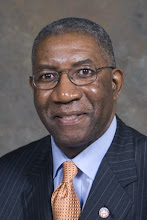
©Wendell Griffen, 2010
On June 15, 2010, barely a month before the first anniversary of the notorious July 16, 2009 encounter between Sergeant James Crowley of the Cambridge, Massachusetts Police Department and Professor Henry Louis Gates, Jr. of Harvard University, a report was issued by the Cambridge Review Committee, a volunteer panel of individuals selected by the City of Cambridge "… for their knowledge of issues in policing and criminal justice, law, race, community relations, organizational behavior, and conflict resolution, as well as their knowledge of the City of Cambridge." The Report, titled, "Missed Opportunities, Shared Responsibilities," asserts that the Crowley-Gates incident was "avoidable" and occurred because "Sergeant Crowley and Professor Gates each missed opportunities to 'ratchet down' the situation and end it peacefully."
Even assuming the best intentions of the Cambridge Review Committee and anyone else responsible for their effort, the report missed the opportunity to state the obvious. Henry Louis Gates, Jr. should have never been arrested for disorderly conduct outside his own home merely because he accused Sergeant Crowley of behaving in a racist manner. Crowley's decision to arrest Gates for disorderly conduct—nothing else—made the incident notorious.
The 64 page report reads as if Gates somehow was obliged to not express his displeasure about being suspected of being a thief in his own residence even after proving his identity and lawful right to be there. The report makes much ado about procedural legitimacy, police discretion, and other concepts, but says nothing about personal liberty to protest how a police officer behaves. For all its words, the "Missed Opportunities, Shared Responsibilities" report missed the opportunity to unapologetically declare that in the United States a person does not forfeit freedom of speech when confronted by law enforcement.
Sergeant Crowley had no discretion to arrest Professor Gates for criticizing his presence or loudly accusing him of behaving in a racist manner. If the First Amendment to the Constitution of the United States means anything, it means that the government cannot prohibit someone from complaining about how its officials behave. There is no discretion for any police officer to arrest someone from complaining about how the officer is performing. The fact that the officer is investigating a burglary call does not render the First Amendment pointless, useless, or void.
Had the Cambridge Review Committee desired to honestly address the Crowley-Gates episode, its report would have made this point. The section of the report that deals with "Police Discretion" would have said that while the police have discretion about whether to make an arrest when they observe unlawful conduct, there is nothing unlawful about protesting police conduct that one considers racially discriminatory, insulting, or otherwise demeaning. Disorderly conduct laws exist to punish civil disturbances, not curb civil liberty. Those laws do not justify arresting anyone for criticizing official behavior, whether by the police or anyone else.
The United States is a free society, not a police state. Strangely, the Cambridge Review Committee missed a clear opportunity to say so.
Tuesday, July 6, 2010

Friday, June 11, 2010
We Aren't Your Field Hands!
Ben Smith writes for Politico.com. On June 8 after Senator Blanche Lincoln of Arkansas won her runoff election with Arkansas Lieutenant Governor Bill Halter, Smith received a phone call from an un-named White House staff member.
"Organized labor just flushed $10 million of their members money down the toilet on a pointless exercise," the official told Smith. "If even half that total had been well-targeted and applied in key House races across this country, that could have made a real difference in November."
That remark demonstrates so much cultural and political insensitivity that it begs for a response. I'm responding as a native Arkansan, an unapologetic Halter supporter, and someone who believes that in a free society people are entitled to choose the people and causes they consider worth supporting.
Bill Halter received almost 48% of the votes in the June 8 runoff election because working people and progressives in Arkansas want a Senator who respects us as equals, not her hired help. Working people and progressives in Arkansas encouraged Halter to run for Senate. We knew it was an uphill fight, and gladly accepted help from around the country.
Workers and progressives are not field hands for Senator Lincoln, the White House, or anyone else. We support candidates whose records and values square with what matters to us. We're concerned about seniors who can't afford their medications. We're concerned about families who can't afford to help their children attend college because government policies helped corporations move jobs out of the country and favored banks over students concerning student loans.
Workers and progressives disagree with politicians who agreed to loan money to Wall Street banks and Detroit auto manufacturers to keep the economy afloat but were unwilling to loan money to working families trying to avoid foreclosure of their homes. We disagree with politicians who realize the need for federally-funded crop insurance for the nation's farmers—a public option that Senator Lincoln has never opposed—but who don't believe that what is good policy for the farm crop should be good policy for the farm workers who produce the crop.
On these and other issues, a Democratic label alone no longer will earn our support. As Jesus said, people are known by their fruit. We supported Halter because Lincoln's voting record doesn't square with our needs and aspirations. That wasn't flushing money down a toilet. It was acting to replace an insensitive politician by supporting someone whose aspirations and values matched our core values.
Barack Obama won the Democratic nomination and the 2008 presidential election because we were willing to "flush" our money and energies this way. Ned Lamont defeated Senator Joe Lieberman for the Democratic primary in 2006 because we were willing to "flush" our money and energies this way. Senator Claire McCaskill was elected to the Senate from Missouri because we were willing to "flush" our money and energies this way.
We didn't toilet our money and energies in those efforts or for Halter. We invested in candidates we embraced. In the Halter instance that investment didn't produce the desired result. Still, it was our investment to make. That's freedom.
If the White House wants to invest its energies more effectively, it shouldn't treat the people who supported Halter's senatorial bid like field hands by talking and acting like plantation owners. That attitude won't help Lincoln win her fall election against Republican Congressman John Boozman, whose campaign coffers will undoubtedly be "flushed" with donations from business tycoons from Arkansas and elsewhere.
Instead, Lincoln and her handlers should ponder how to re-habilitate her in the minds of Arkansas voters who supported Halter. Lincoln can't win the general election without our votes. Treating us like field hands isn't the way to get them.
Thanks to the White House staffer who spoke with Ben Smith, we know what Lincoln's White House cheerleaders think of us. We're not your field hands. If you want to lose Lincoln's seat in the fall, continue talking and acting like we are.
"Organized labor just flushed $10 million of their members money down the toilet on a pointless exercise," the official told Smith. "If even half that total had been well-targeted and applied in key House races across this country, that could have made a real difference in November."
That remark demonstrates so much cultural and political insensitivity that it begs for a response. I'm responding as a native Arkansan, an unapologetic Halter supporter, and someone who believes that in a free society people are entitled to choose the people and causes they consider worth supporting.
Bill Halter received almost 48% of the votes in the June 8 runoff election because working people and progressives in Arkansas want a Senator who respects us as equals, not her hired help. Working people and progressives in Arkansas encouraged Halter to run for Senate. We knew it was an uphill fight, and gladly accepted help from around the country.
Workers and progressives are not field hands for Senator Lincoln, the White House, or anyone else. We support candidates whose records and values square with what matters to us. We're concerned about seniors who can't afford their medications. We're concerned about families who can't afford to help their children attend college because government policies helped corporations move jobs out of the country and favored banks over students concerning student loans.
Workers and progressives disagree with politicians who agreed to loan money to Wall Street banks and Detroit auto manufacturers to keep the economy afloat but were unwilling to loan money to working families trying to avoid foreclosure of their homes. We disagree with politicians who realize the need for federally-funded crop insurance for the nation's farmers—a public option that Senator Lincoln has never opposed—but who don't believe that what is good policy for the farm crop should be good policy for the farm workers who produce the crop.
On these and other issues, a Democratic label alone no longer will earn our support. As Jesus said, people are known by their fruit. We supported Halter because Lincoln's voting record doesn't square with our needs and aspirations. That wasn't flushing money down a toilet. It was acting to replace an insensitive politician by supporting someone whose aspirations and values matched our core values.
Barack Obama won the Democratic nomination and the 2008 presidential election because we were willing to "flush" our money and energies this way. Ned Lamont defeated Senator Joe Lieberman for the Democratic primary in 2006 because we were willing to "flush" our money and energies this way. Senator Claire McCaskill was elected to the Senate from Missouri because we were willing to "flush" our money and energies this way.
We didn't toilet our money and energies in those efforts or for Halter. We invested in candidates we embraced. In the Halter instance that investment didn't produce the desired result. Still, it was our investment to make. That's freedom.
If the White House wants to invest its energies more effectively, it shouldn't treat the people who supported Halter's senatorial bid like field hands by talking and acting like plantation owners. That attitude won't help Lincoln win her fall election against Republican Congressman John Boozman, whose campaign coffers will undoubtedly be "flushed" with donations from business tycoons from Arkansas and elsewhere.
Instead, Lincoln and her handlers should ponder how to re-habilitate her in the minds of Arkansas voters who supported Halter. Lincoln can't win the general election without our votes. Treating us like field hands isn't the way to get them.
Thanks to the White House staffer who spoke with Ben Smith, we know what Lincoln's White House cheerleaders think of us. We're not your field hands. If you want to lose Lincoln's seat in the fall, continue talking and acting like we are.
Sunday, June 6, 2010
ARROGANT, INCOMPETENT, AND UNCHECKED
By now most of the nation recognizes that the risks associated with offshore oil exploration are more real than the oil industry, lawmakers, and government regulators have ever admitted. U.S. and state lawmakers and regulators either failed to understand or consciously chose to place blind and unjustifiable trust in oil industry claims about the safety of offshore oil exploration. The same lawmakers and regulators chose to blindly believe oil industry claims that devices to prevent deep sea oil well blowouts will work, or can be effectively repaired before a devastating oil leak occurs following a blowout. Now, almost two months after oil began leaking from the April 20 blowout of the Deepwater Horizon offshore oil well more than a mile beneath the surface of the Gulf of Mexico, we know how wrong those claims were.
As much as it may hurt, it is time to admit the truth. The oil industry and government regulators gambled that offshore oil exploration would not pose a problem to the environment, or that any problem would be manageable. Americans joined the bet. We lost.
It is important to realize that the gamble was not necessary. It is certainly true that the United States is overly dependent on oil and other fossil fuels for energy needs. President Jimmy Carter warned about that over-dependence during his one term in office, a factor that probably played a role in his unpopularity and eventual defeat by Ronald Reagan in 1980 thirty years ago. Had the U.S. population chosen to believe President Carter, heed his urgent call to refocus our lives around conserving energy better, decrease how much we rely on petroleum and other fossil fuels, develop new energy sources and supply systems, and rethink the way we travel (such as by relying more on mass transit), the chances are good that offshore oil drilling would not have been permitted so much and managed so poorly.
But national and corporate arrogance combined with political and corporate opportunism led Americans to reject Carter's assessment of the situation and his plan for energy management. Ronald Reagan, with an easy grin, familiar voice, and rosy projections of national life built on distrust for government and blind trust in the supposed virtues of free enterprise, defeated Carter in 1980. Reagan's election ended the fledgling steps taken during the Carter administration to shift the United States away from its addiction to oil. Reagan's vice presidential running mate was George H.W. Bush, a longtime friend of the Texas oil industry. James Baker, the Texas lawyer whose clients included major petroleum companies, served as chief of staff, Secretary of the Treasury, and Secretary of State during the Reagan and George H.W. Bush presidencies (1980-1992). Although the United States worked with other nations to craft the Kyoto Protocol calling for global reduction in greenhouse gases caused by use of fossil fuels during the presidency of Bill Clinton, the United States refused to join the Kyoto Protocol after George W. Bush became President in 2001. Then Vice President Richard B. Cheney and oil industry apologists crafted energy policies favoring increased offshore oil drilling as well as drilling on federal land. One of their most bitter complaints was that they were unable to persuade Congress to permit oil exploration in the Arctic National Wildlife Refuge. And during the 2008 presidential election contest, Republican Senator John McCain of Arizona chose Alaska Governor Sarah "Drill, Baby, Drill" Palin as his vice presidential running mate.
Even now it is interesting to observe how journalists, political historians, and the American public have ignored or pretended to forget this history. The Deepwater Horizon offshore oil well was placed into service in 2001. Oil industry leaders and political leaders from oil industry states downplayed the risks associated with offshore oil exploration and production long before then. As late as March 23, 2010, President Obama signaled his administration's approval of continued offshore oil exploration despite objections by environmentalists. Whenever environmental and safety concerns were raised, oil industry officials and their political friends would confidently assert that the risks associated with offshore oil exploration are rare and manageable. The world now knows that the risks are tragically real, that the oil industry, governmental regulators, and our lawmakers cannot manage the damage associated with them, and that we have no reason to expect that to change in the foreseeable future if we continue business as usual.
All of this should point the nation back to its rejection of President Jimmy Carter's effort to redirect the way we use energy and the sources for our energy. Carter was defeated in 1980 by Reagan, whose distrust of governmental regulation helped chart the course for U.S. energy over the past thirty years. Dead birds and fish increase and more land, water, and people are threatened with each passing day because of the Deepwater Horizon oil spill. Yet the oil industry remains unwilling to admit its environmental arrogance and incompetence and is still somewhat unchecked by governmental lawmakers and regulators. This is the "small government" reality Americans chose with Reagan in 1980, along with Reagan's affable invitation that we embrace what we should now realize was free enterprise idolatry.
American energy policy, one result of that idolatry, now has tar balls washing ashore along the beaches of the Florida Gulf Coast. The families of killed and wounded workers on the Deepwater Horizon platform struggle with tragedies that will never be undone. We face years—if not decades—during which the waters of the Gulf will be unsafe for fish, water fowl, and humans. In the words of the Hebrew prophet Jeremiah, "the harvest is past, the summer is ended, and we are not saved."
It is not unfair to wonder how things might have been different had the nation listened to and trusted Carter's prophetic efforts instead of following Reagan's path.
As much as it may hurt, it is time to admit the truth. The oil industry and government regulators gambled that offshore oil exploration would not pose a problem to the environment, or that any problem would be manageable. Americans joined the bet. We lost.
It is important to realize that the gamble was not necessary. It is certainly true that the United States is overly dependent on oil and other fossil fuels for energy needs. President Jimmy Carter warned about that over-dependence during his one term in office, a factor that probably played a role in his unpopularity and eventual defeat by Ronald Reagan in 1980 thirty years ago. Had the U.S. population chosen to believe President Carter, heed his urgent call to refocus our lives around conserving energy better, decrease how much we rely on petroleum and other fossil fuels, develop new energy sources and supply systems, and rethink the way we travel (such as by relying more on mass transit), the chances are good that offshore oil drilling would not have been permitted so much and managed so poorly.
But national and corporate arrogance combined with political and corporate opportunism led Americans to reject Carter's assessment of the situation and his plan for energy management. Ronald Reagan, with an easy grin, familiar voice, and rosy projections of national life built on distrust for government and blind trust in the supposed virtues of free enterprise, defeated Carter in 1980. Reagan's election ended the fledgling steps taken during the Carter administration to shift the United States away from its addiction to oil. Reagan's vice presidential running mate was George H.W. Bush, a longtime friend of the Texas oil industry. James Baker, the Texas lawyer whose clients included major petroleum companies, served as chief of staff, Secretary of the Treasury, and Secretary of State during the Reagan and George H.W. Bush presidencies (1980-1992). Although the United States worked with other nations to craft the Kyoto Protocol calling for global reduction in greenhouse gases caused by use of fossil fuels during the presidency of Bill Clinton, the United States refused to join the Kyoto Protocol after George W. Bush became President in 2001. Then Vice President Richard B. Cheney and oil industry apologists crafted energy policies favoring increased offshore oil drilling as well as drilling on federal land. One of their most bitter complaints was that they were unable to persuade Congress to permit oil exploration in the Arctic National Wildlife Refuge. And during the 2008 presidential election contest, Republican Senator John McCain of Arizona chose Alaska Governor Sarah "Drill, Baby, Drill" Palin as his vice presidential running mate.
Even now it is interesting to observe how journalists, political historians, and the American public have ignored or pretended to forget this history. The Deepwater Horizon offshore oil well was placed into service in 2001. Oil industry leaders and political leaders from oil industry states downplayed the risks associated with offshore oil exploration and production long before then. As late as March 23, 2010, President Obama signaled his administration's approval of continued offshore oil exploration despite objections by environmentalists. Whenever environmental and safety concerns were raised, oil industry officials and their political friends would confidently assert that the risks associated with offshore oil exploration are rare and manageable. The world now knows that the risks are tragically real, that the oil industry, governmental regulators, and our lawmakers cannot manage the damage associated with them, and that we have no reason to expect that to change in the foreseeable future if we continue business as usual.
All of this should point the nation back to its rejection of President Jimmy Carter's effort to redirect the way we use energy and the sources for our energy. Carter was defeated in 1980 by Reagan, whose distrust of governmental regulation helped chart the course for U.S. energy over the past thirty years. Dead birds and fish increase and more land, water, and people are threatened with each passing day because of the Deepwater Horizon oil spill. Yet the oil industry remains unwilling to admit its environmental arrogance and incompetence and is still somewhat unchecked by governmental lawmakers and regulators. This is the "small government" reality Americans chose with Reagan in 1980, along with Reagan's affable invitation that we embrace what we should now realize was free enterprise idolatry.
American energy policy, one result of that idolatry, now has tar balls washing ashore along the beaches of the Florida Gulf Coast. The families of killed and wounded workers on the Deepwater Horizon platform struggle with tragedies that will never be undone. We face years—if not decades—during which the waters of the Gulf will be unsafe for fish, water fowl, and humans. In the words of the Hebrew prophet Jeremiah, "the harvest is past, the summer is ended, and we are not saved."
It is not unfair to wonder how things might have been different had the nation listened to and trusted Carter's prophetic efforts instead of following Reagan's path.
Wednesday, December 9, 2009
RE-THINKING PEACE
When it refused to endorse a statement expressing regret that the racial composition of the Arkansas Supreme Court in 2010 will be no different from what it was in 1910 during the heyday of Jim Crow segregation, some members of the Faith Caucus of the Democratic Party of Arkansas and the deputy chief of staff of Governor Mike Beebe expressed regret that Democrats were arguing among ourselves. They were displeased that conflict and tension was introduced into the Faith Caucus by my request that the Caucus endorse the statement of regret. They were uncomfortable with appearing disharmonious toward Governor Beebe. A respected black member of the Caucus even contended that the issue was outside the jurisdiction of the Caucus, whose stated mission is to promote education about the role of religion in public policy. The prevailing sentiment was that the proposed statement expressing regret and the publicity surrounding Governor Beebe's refusal to integrate the all-white Arkansas Supreme Court was contentious, unseemly, and disruptive.
Since the Faith Caucus meeting, I have reflected about how people accept injustice in the name of "peace." Then I remembered a sermon titled "When Peace Becomes Obnoxious" during which the preacher said that there is a kind of peace that is a stench to the nostrils of God. The preacher concluded the sermon with these words: "If peace means accepting second-class citizenship, I don't want it. If peace means keeping my mouth shut in the midst of injustice and evil, I don't want it. If peace means being complacently adjusted to a deadening status quo, I don't want peace. If peace means a willingness to be exploited economically, dominated politically, humiliated and segregated, I don't want peace. … Peace is not merely the absence of tension, but the presence of justice."
That sermon was delivered in 1956, weeks after a black woman named Autherine Lucy was asked by the president and trustees of the University of Alabama to leave the school's campus for her own safety and that of the University in the face of vicious threats and acts of violence directed toward her. The preacher mentioned in his sermon, "The day after Autherine was dismissed, the paper came out with this headline: "Things are quiet in Tuscaloosa today. There is peace on the campus of the University of Alabama."
In 1956, Tuscaloosa, Alabama and the University of Alabama were quiet and peaceful communities. The University of Alabama president and trustees were relieved, perhaps even satisfied. Meanwhile, Autherine Lucy had been denied her right to be included. Injustice often masquerades under the veneer of that kind of peace.
Last week, black lawyers in Arkansas were professionally and politically slandered as not being sufficiently competent, ethical, or deferential to serve on the Arkansas Supreme Court for a year. A tenured law professor at the UA School of Law (Carlton Bailey), a seasoned assistant attorney general (Valerie Kelly), a former attorney general (Leon Johnson), the dean of black lawyers in Arkansas (Christopher Mercer), and a host of other lawyers must accept second-class citizenship, keep their mouths shut, complacently adjust to a deadening status quo, and be willing to endure the humiliation of being considered unfit, to keep peace.
Things are quiet in Little Rock today. There is peace in Governor Beebe's office. The legal profession is quiet. The bar association is quiet. Voters and legislators are quiet. There is no regret. No discontentment. If this is peace, I don't want it. I don't want a peace constructed from injustice, exclusionary practices, and defended with blithe rationalizations and sanctimonious absurdities.
Neither did the other preacher. You may have heard of Martin Luther King, Jr. Yeah. That guy who is only remembered for saying "I have a dream."
In "When Peace Becomes Obnoxious," King said that unjust peace is a stench in the nostrils of Almighty God. King rejected such an obnoxious, cancerous, deadly, insidious, polite, courteous, diplomatic, and politically convenient peace. I suspect you won't hear people quoting the "When Peace Becomes Obnoxious" sermon next month during their King Holiday ceremonies.
Perhaps this explains why the faith caucus refused to endorse the statement of regret. Perhaps this explains why people in Arkansas, including some black people, wish the issue would simply go away. Obnoxious peace, not justice, is what passes for race relations in Arkansas in 2009.
That was not what Dr. King dreamed. King was not wrong in rejecting obnoxious peace. We are wrong in preferring it. We should re-think the dream, and re-think peace.
Since the Faith Caucus meeting, I have reflected about how people accept injustice in the name of "peace." Then I remembered a sermon titled "When Peace Becomes Obnoxious" during which the preacher said that there is a kind of peace that is a stench to the nostrils of God. The preacher concluded the sermon with these words: "If peace means accepting second-class citizenship, I don't want it. If peace means keeping my mouth shut in the midst of injustice and evil, I don't want it. If peace means being complacently adjusted to a deadening status quo, I don't want peace. If peace means a willingness to be exploited economically, dominated politically, humiliated and segregated, I don't want peace. … Peace is not merely the absence of tension, but the presence of justice."
That sermon was delivered in 1956, weeks after a black woman named Autherine Lucy was asked by the president and trustees of the University of Alabama to leave the school's campus for her own safety and that of the University in the face of vicious threats and acts of violence directed toward her. The preacher mentioned in his sermon, "The day after Autherine was dismissed, the paper came out with this headline: "Things are quiet in Tuscaloosa today. There is peace on the campus of the University of Alabama."
In 1956, Tuscaloosa, Alabama and the University of Alabama were quiet and peaceful communities. The University of Alabama president and trustees were relieved, perhaps even satisfied. Meanwhile, Autherine Lucy had been denied her right to be included. Injustice often masquerades under the veneer of that kind of peace.
Last week, black lawyers in Arkansas were professionally and politically slandered as not being sufficiently competent, ethical, or deferential to serve on the Arkansas Supreme Court for a year. A tenured law professor at the UA School of Law (Carlton Bailey), a seasoned assistant attorney general (Valerie Kelly), a former attorney general (Leon Johnson), the dean of black lawyers in Arkansas (Christopher Mercer), and a host of other lawyers must accept second-class citizenship, keep their mouths shut, complacently adjust to a deadening status quo, and be willing to endure the humiliation of being considered unfit, to keep peace.
Things are quiet in Little Rock today. There is peace in Governor Beebe's office. The legal profession is quiet. The bar association is quiet. Voters and legislators are quiet. There is no regret. No discontentment. If this is peace, I don't want it. I don't want a peace constructed from injustice, exclusionary practices, and defended with blithe rationalizations and sanctimonious absurdities.
Neither did the other preacher. You may have heard of Martin Luther King, Jr. Yeah. That guy who is only remembered for saying "I have a dream."
In "When Peace Becomes Obnoxious," King said that unjust peace is a stench in the nostrils of Almighty God. King rejected such an obnoxious, cancerous, deadly, insidious, polite, courteous, diplomatic, and politically convenient peace. I suspect you won't hear people quoting the "When Peace Becomes Obnoxious" sermon next month during their King Holiday ceremonies.
Perhaps this explains why the faith caucus refused to endorse the statement of regret. Perhaps this explains why people in Arkansas, including some black people, wish the issue would simply go away. Obnoxious peace, not justice, is what passes for race relations in Arkansas in 2009.
That was not what Dr. King dreamed. King was not wrong in rejecting obnoxious peace. We are wrong in preferring it. We should re-think the dream, and re-think peace.
Monday, December 7, 2009
Why Cultural Competence Should Matter to Leaders in Arkansas
Why Cultural Competence Should Matter to Leaders in Arkansas
©Wendell Griffen, 2009
Arkansas Governor Mike Beebe is, by all well-informed accounts, an affable person. He has a long record of victories in political elections. He has a compelling personal history of being raised by a single mother, embraced by nurturing people during his youth, and having worked hard to attend Arkansas State University and later obtain his law degree from the University of Arkansas. He was a successful trial lawyer, and is a devoted family man. He served in the Arkansas legislature and became known as a leading moderate voice about public policy. As Attorney General of Arkansas, Beebe led the largest firm of lawyers in the state, including several lawyers of color whose experience, temperament, and other attributes qualified them to fill an interim position on the Arkansas Supreme Court—a fact that Governor Beebe's staffers and apologists can neither deny nor refute.
In his campaign for election as Governor of Arkansas, Beebe garnered support from all elements of the Democratic Party of Arkansas, including people of color. As Governor, Beebe has appointed people of color to numerous political positions—a point Beebe's deputy chief of staff has emphasized in response to criticism of his failure to name a person of color to the Arkansas Supreme Court despite two opportunities during the almost three years he has been in office.
How could any leader with so many favorable attributes be considered "culturally incompetent"? If Beebe can be culturally incompetent, what does "cultural competence" mean, and how does one avoid "cultural incompetence"? Why does "cultural competence" matter so much, if at all?
The answer to the first question (how any leader such as Beebe could be considered "culturally incompetent") is unsurprisingly simple, and points to the second question (what does "cultural competence" mean). Cultural competence does not depend on affability, political popularity, the touching appeal of one's personal history, success in winning lawsuits, family devotedness, experience leading a law firm that includes people of color, or political standing with people of color. None of those attributes makes Governor Beebe or anyone else competent concerning cross-cultural interactions, relationships, and inclusion. The fact that Governor Beebe's staff and apologists point to those attributes demonstrates that they apparently share Beebe's poor knowledge about what cultural competence means. It is always wise to understand what something is before professing to know what it is not.
Cultural competence involves integrating and transforming knowledge about individuals, situations, events, and groups of people into congruent standards, policies, practices, and attitudes and applying that knowledge in appropriate cross-cultural settings to achieve effective results. As such, cultural competence involves four principal components: cultural self-awareness (awareness of one's own cultural worldview); attitudes concerning cultural differences; knowledge of different cultural practices and worldviews; and skill (ability to achieve effective results in cross-cultural situations and encounters).
Cultural competence focuses on results, not intentions, for an obvious reason. Good intentions do not make one competent. One can be an incompetent motorist and affable, educated, industrious, devout, and even politically progressive. None of those factors makes one competent to operate an automobile on a six-lane metropolitan thoroughfare. Saying "I meant well" after causing a collision on such a highway does not make one a competent driver. Standing alone, the statement is merely an excuse for not driving competently.
That is why it is immaterial whether Governor Beebe has acted with benevolent or malevolent intent in maintaining the all-white composition of the Arkansas Supreme Court despite having two recent opportunities to make the state's highest court racially inclusive. Competence is not measured by what one intends, but what one does. Otherwise, no student would ever fail any course unless he intended to fail.
Cultural competence is measured in terms of a six-point continuum that focuses on results ranging from cultural destructiveness to cultural proficiency. The specific aspects of the continuum are:
1. Cultural destructiveness—policies, practices, attitudes, behaviors in cross-cultural situations deliberately produce destructive results. Think of genocide, slavery, rape, intentional disenfranchisement of women and people of color.
2. Cultural incapacity—policies, practices, attitudes, behaviors unintentionally produce results that are destructive or counter-productive in cross-cultural situations. Think of a physician who does not take the medical history of a woman with insulin-dependent concerning her social practices regarding tobacco, when the woman regularly chews tobacco, a product made using molasses.
3. Cultural blindness—policies, practices, attitudes, behaviors are insensitive to the results of cross-cultural situations. The cartoon character "Mr. Magoo" never intended to cause collisions. He could not even recognize that he caused collisions because his near-sightedness was disabling. Blindness is a disability, not a skill.
4. Cultural pre-competence—policies, practices, attitudes, behaviors demonstrate effort, but ineffectiveness, in cross-cultural situations. Typical examples of cultural pre-competence involve affirming that a person or organization is culturally competent by pointing to token or symbolic achievements. Stating that "we have appointed more people of color than any previous administration" may be accurate. The statement does not make a leader better at any cross-cultural interaction. It merely means that the leader has better numbers and is better at counting than previous leaders (whether they cared about the numbers or not). Pre-competence is not competence. A host of pre-mature infants are not mature infants.
5. Cultural competence—persons, organizations, and institutions that perform at this level incorporate five basic skills into ongoing policies, practices, and processes (cultural self-awareness, awareness and acceptance of cultural differences, understanding the dynamics of cultural difference, knowledge of the culture of clients, and skillful adaptation and application of that knowledge in accommodating cultural differences to achieve effective results).
6. Cultural proficiency—persons, organizations, and institutions that perform at this level effectively handle the five skills involved with cultural competence, but also are leading forces, trend-setters, and proponents of "best practices" regarding cultural competence and inclusion.
Whether one views Governor Beebe's decision to maintain the all-white composition of the Arkansas Supreme Court as intentionally destructive (cultural destructiveness), unintentionally destructive (cultural incapacity), insensitive (cultural blindness), or merely ham-handed (culturally pre-competent) can be reasonably debated by people who understand what cultural competence means. At best, however, Beebe's action demonstrated cultural pre-competence. Pre-competence is not competence. Otherwise, the prefix would not be necessary.
People who do not know what cultural competence means will not understand that bragging about being pre-competent is, in itself, glaring evidence of cultural incompetence. The same is true of people who would brag about how well Beebe wins elections, how successful he was as a trial lawyer, or how much he loves being Governor. Culturally incompetent politicians can win elections and culturally incompetent lawyers can win cases when cultural competence does not matter. The history of Arkansas clearly proves that our political officials and lawyers have not cared about cultural competence, and that not caring was not harmful to their aspirations. Orval Faubus was politically powerful and effective because he was culturally destructive. Most Arkansans liked it, and watched as other states advanced over the past half-century.
Cultural incompetence, however popular, comes with a cost. In a world of many cultures where goods and services are increasingly being marketed and acquired on a global basis, being culturally incompetent makes no economic sense. Other states are thinking about cultural competence in terms of how they conduct and market themselves. How will the recent Supreme Court appointment allow Arkansas to be measured? How many opportunities will be lost because of cultural incompetence?
As matters now stand, Governor Beebe has defended his culturally incompetent conduct by claiming that his administration is better at being culturally pre-competent than previous administrations, by saying that he could not find a black lawyer qualified to serve a one-year appointment to the Supreme Court after three black lawyers turned him down. His deputy chief of staff—a black lawyer--effectively lobbied the Faith Caucus of the Democratic Party of Arkansas last Saturday to not endorse a statement expressing regret that the racial composition of the Arkansas Supreme Court in 2010 will be no different from what it was in 1910, at the heyday of Jim Crow segregation. Notice, cultural incompetence is not race specific.
So, Governor Beebe has decided to maintain the all-white composition of the Arkansas Supreme Court. Beyond that, he does not regret that the racial composition of the Arkansas Supreme Court in 2010 will be no different from what it was in 1910. Of course, Governor Beebe is a fine fellow. He has won many elections. He loves being Governor. He has black lawyers on his staff. He just does not regret that the racial composition of the Arkansas Supreme Court in 2010 will be no different from what it was in 1910. Otherwise, he would have acted to make it different, or at least express regret that he failed to do so.
Governor Beebe's performance—after all, that is how competence is always measured—does not demonstrate cultural competence. Rather, it demonstrates how little Beebe and his staff understand about cultural competence, assuming they know enough to care about it.
©Wendell Griffen, 2009
Arkansas Governor Mike Beebe is, by all well-informed accounts, an affable person. He has a long record of victories in political elections. He has a compelling personal history of being raised by a single mother, embraced by nurturing people during his youth, and having worked hard to attend Arkansas State University and later obtain his law degree from the University of Arkansas. He was a successful trial lawyer, and is a devoted family man. He served in the Arkansas legislature and became known as a leading moderate voice about public policy. As Attorney General of Arkansas, Beebe led the largest firm of lawyers in the state, including several lawyers of color whose experience, temperament, and other attributes qualified them to fill an interim position on the Arkansas Supreme Court—a fact that Governor Beebe's staffers and apologists can neither deny nor refute.
In his campaign for election as Governor of Arkansas, Beebe garnered support from all elements of the Democratic Party of Arkansas, including people of color. As Governor, Beebe has appointed people of color to numerous political positions—a point Beebe's deputy chief of staff has emphasized in response to criticism of his failure to name a person of color to the Arkansas Supreme Court despite two opportunities during the almost three years he has been in office.
How could any leader with so many favorable attributes be considered "culturally incompetent"? If Beebe can be culturally incompetent, what does "cultural competence" mean, and how does one avoid "cultural incompetence"? Why does "cultural competence" matter so much, if at all?
The answer to the first question (how any leader such as Beebe could be considered "culturally incompetent") is unsurprisingly simple, and points to the second question (what does "cultural competence" mean). Cultural competence does not depend on affability, political popularity, the touching appeal of one's personal history, success in winning lawsuits, family devotedness, experience leading a law firm that includes people of color, or political standing with people of color. None of those attributes makes Governor Beebe or anyone else competent concerning cross-cultural interactions, relationships, and inclusion. The fact that Governor Beebe's staff and apologists point to those attributes demonstrates that they apparently share Beebe's poor knowledge about what cultural competence means. It is always wise to understand what something is before professing to know what it is not.
Cultural competence involves integrating and transforming knowledge about individuals, situations, events, and groups of people into congruent standards, policies, practices, and attitudes and applying that knowledge in appropriate cross-cultural settings to achieve effective results. As such, cultural competence involves four principal components: cultural self-awareness (awareness of one's own cultural worldview); attitudes concerning cultural differences; knowledge of different cultural practices and worldviews; and skill (ability to achieve effective results in cross-cultural situations and encounters).
Cultural competence focuses on results, not intentions, for an obvious reason. Good intentions do not make one competent. One can be an incompetent motorist and affable, educated, industrious, devout, and even politically progressive. None of those factors makes one competent to operate an automobile on a six-lane metropolitan thoroughfare. Saying "I meant well" after causing a collision on such a highway does not make one a competent driver. Standing alone, the statement is merely an excuse for not driving competently.
That is why it is immaterial whether Governor Beebe has acted with benevolent or malevolent intent in maintaining the all-white composition of the Arkansas Supreme Court despite having two recent opportunities to make the state's highest court racially inclusive. Competence is not measured by what one intends, but what one does. Otherwise, no student would ever fail any course unless he intended to fail.
Cultural competence is measured in terms of a six-point continuum that focuses on results ranging from cultural destructiveness to cultural proficiency. The specific aspects of the continuum are:
1. Cultural destructiveness—policies, practices, attitudes, behaviors in cross-cultural situations deliberately produce destructive results. Think of genocide, slavery, rape, intentional disenfranchisement of women and people of color.
2. Cultural incapacity—policies, practices, attitudes, behaviors unintentionally produce results that are destructive or counter-productive in cross-cultural situations. Think of a physician who does not take the medical history of a woman with insulin-dependent concerning her social practices regarding tobacco, when the woman regularly chews tobacco, a product made using molasses.
3. Cultural blindness—policies, practices, attitudes, behaviors are insensitive to the results of cross-cultural situations. The cartoon character "Mr. Magoo" never intended to cause collisions. He could not even recognize that he caused collisions because his near-sightedness was disabling. Blindness is a disability, not a skill.
4. Cultural pre-competence—policies, practices, attitudes, behaviors demonstrate effort, but ineffectiveness, in cross-cultural situations. Typical examples of cultural pre-competence involve affirming that a person or organization is culturally competent by pointing to token or symbolic achievements. Stating that "we have appointed more people of color than any previous administration" may be accurate. The statement does not make a leader better at any cross-cultural interaction. It merely means that the leader has better numbers and is better at counting than previous leaders (whether they cared about the numbers or not). Pre-competence is not competence. A host of pre-mature infants are not mature infants.
5. Cultural competence—persons, organizations, and institutions that perform at this level incorporate five basic skills into ongoing policies, practices, and processes (cultural self-awareness, awareness and acceptance of cultural differences, understanding the dynamics of cultural difference, knowledge of the culture of clients, and skillful adaptation and application of that knowledge in accommodating cultural differences to achieve effective results).
6. Cultural proficiency—persons, organizations, and institutions that perform at this level effectively handle the five skills involved with cultural competence, but also are leading forces, trend-setters, and proponents of "best practices" regarding cultural competence and inclusion.
Whether one views Governor Beebe's decision to maintain the all-white composition of the Arkansas Supreme Court as intentionally destructive (cultural destructiveness), unintentionally destructive (cultural incapacity), insensitive (cultural blindness), or merely ham-handed (culturally pre-competent) can be reasonably debated by people who understand what cultural competence means. At best, however, Beebe's action demonstrated cultural pre-competence. Pre-competence is not competence. Otherwise, the prefix would not be necessary.
People who do not know what cultural competence means will not understand that bragging about being pre-competent is, in itself, glaring evidence of cultural incompetence. The same is true of people who would brag about how well Beebe wins elections, how successful he was as a trial lawyer, or how much he loves being Governor. Culturally incompetent politicians can win elections and culturally incompetent lawyers can win cases when cultural competence does not matter. The history of Arkansas clearly proves that our political officials and lawyers have not cared about cultural competence, and that not caring was not harmful to their aspirations. Orval Faubus was politically powerful and effective because he was culturally destructive. Most Arkansans liked it, and watched as other states advanced over the past half-century.
Cultural incompetence, however popular, comes with a cost. In a world of many cultures where goods and services are increasingly being marketed and acquired on a global basis, being culturally incompetent makes no economic sense. Other states are thinking about cultural competence in terms of how they conduct and market themselves. How will the recent Supreme Court appointment allow Arkansas to be measured? How many opportunities will be lost because of cultural incompetence?
As matters now stand, Governor Beebe has defended his culturally incompetent conduct by claiming that his administration is better at being culturally pre-competent than previous administrations, by saying that he could not find a black lawyer qualified to serve a one-year appointment to the Supreme Court after three black lawyers turned him down. His deputy chief of staff—a black lawyer--effectively lobbied the Faith Caucus of the Democratic Party of Arkansas last Saturday to not endorse a statement expressing regret that the racial composition of the Arkansas Supreme Court in 2010 will be no different from what it was in 1910, at the heyday of Jim Crow segregation. Notice, cultural incompetence is not race specific.
So, Governor Beebe has decided to maintain the all-white composition of the Arkansas Supreme Court. Beyond that, he does not regret that the racial composition of the Arkansas Supreme Court in 2010 will be no different from what it was in 1910. Of course, Governor Beebe is a fine fellow. He has won many elections. He loves being Governor. He has black lawyers on his staff. He just does not regret that the racial composition of the Arkansas Supreme Court in 2010 will be no different from what it was in 1910. Otherwise, he would have acted to make it different, or at least express regret that he failed to do so.
Governor Beebe's performance—after all, that is how competence is always measured—does not demonstrate cultural competence. Rather, it demonstrates how little Beebe and his staff understand about cultural competence, assuming they know enough to care about it.
Monday, October 12, 2009
Health Insurance is A Moral Imperative
There is a troublesome and troubling silence within the religious community concerning the current U.S. healthcare insurance reform debate. People of all faiths, backgrounds, political beliefs, and education levels are challenged daily to obtain and keep affordable health insurance. Reports about health insurance industry abuses—such as "rescission" where insurers terminate coverage and refund premium payments to customers who are diagnosed with chronic or life-threatening illnesses covered by their policies—are well known to everyone, including religious leaders. However, religious leaders and groups have stood silently on the sidelines.
As a Christian minister, I find this situation troublesome. The Bible is full of lessons about healing, health, and compassion for wounded and diseased people. Jesus Christ made healing an integral feature of his ministry. One would think that Christian pastors would be active thought and action leaders concerning the health insurance reform debate. What could possibly be harmful about teaching and leading our congregants and the wider public about this issue?
Because healing is integral to the redemptive ministry of Jesus Christ, it is also troubling if Christian ministers will not recognize the obvious moral implications surrounding the current healthcare insurance system and the need to reform it. It is troubling that religious leaders of all faiths and creeds are not actively determined to make health care affordable and available to every person in this society. The people who should be providing moral leadership concerning this life and death issue are conspicuously shirking our responsibility.
I urge the congregation I serve to be engaged in the healthcare reform debate, and openly favor a publicly-financed program to cover any person who cannot afford insurance in the private market or who may prefer coverage under the public program. Private insurers are interested in charging whatever people will pay while providing as little insurance coverage as possible. The private insurance industry hopes the current healthcare reform movement will require Americans to obtain health insurance and produce millions of new customers. Without a public option, all Americans, and especially the most vulnerable, will be at the mercy of the industry's pricing and delivery practices.
The public financing option for healthcare insurance reform is a moral and civil rights issue. A fair society does not force people who become ill and wounded to depend on the avarice and greed of the market place for their care. Religious leaders should demand that President Obama and Congress include a strong public option as part of healthcare insurance reform. After all, we are constantly confronted with the realities and injustices associated with the existing system.
In this regard, I am struck by what Walter Rauschenbusch, regarded as the father of the Social Gospel movement within 20th Century Christian thought, wrote in his landmark work titled Christianity and the Social Crisis, published in 1907.
"Few churches have the resources and leadership to undertake institutional work on a large scale, but … all pastors who are at all willing to do it have institutional work thrust on them. They have to care for the poor… This is the stake of the churches in modern poverty. They are buried at times under a stream of human wreckage… They have a right, therefore, to inquire who is unloading this burden of poverty and suffering upon them by underpaying, exhausting, and maiming the people. The Good Samaritan did not go after the robbers with a shotgun, but looked after the wounded and helpless man by the wayside. But if hundreds of Good Samaritans traveling the same road should find thousands of bruised men groaning to them, they would not be such very Good Samaritans if they did not organize a vigilance committee to stop the manufacturing of wounded men. If they did not, presumably the asses who had to lug the wounded to the tavern would have the wisdom to inquire into the causes of their extra work."
My congregation holds me accountable for what I say and do concerning the moral implications of public policy issues. More importantly, God holds us accountable for what we do—and for what we fail to do—to provide fair and adequate healthcare for every person in our society, including people who cannot afford it. This is a fundamental issue of social justice. Shame on religious leaders and congregations if we avert our eyes and pass to the other side of the healthcare insurance Jericho Road while millions of bruised and robbed people suffer.
As a Christian minister, I find this situation troublesome. The Bible is full of lessons about healing, health, and compassion for wounded and diseased people. Jesus Christ made healing an integral feature of his ministry. One would think that Christian pastors would be active thought and action leaders concerning the health insurance reform debate. What could possibly be harmful about teaching and leading our congregants and the wider public about this issue?
Because healing is integral to the redemptive ministry of Jesus Christ, it is also troubling if Christian ministers will not recognize the obvious moral implications surrounding the current healthcare insurance system and the need to reform it. It is troubling that religious leaders of all faiths and creeds are not actively determined to make health care affordable and available to every person in this society. The people who should be providing moral leadership concerning this life and death issue are conspicuously shirking our responsibility.
I urge the congregation I serve to be engaged in the healthcare reform debate, and openly favor a publicly-financed program to cover any person who cannot afford insurance in the private market or who may prefer coverage under the public program. Private insurers are interested in charging whatever people will pay while providing as little insurance coverage as possible. The private insurance industry hopes the current healthcare reform movement will require Americans to obtain health insurance and produce millions of new customers. Without a public option, all Americans, and especially the most vulnerable, will be at the mercy of the industry's pricing and delivery practices.
The public financing option for healthcare insurance reform is a moral and civil rights issue. A fair society does not force people who become ill and wounded to depend on the avarice and greed of the market place for their care. Religious leaders should demand that President Obama and Congress include a strong public option as part of healthcare insurance reform. After all, we are constantly confronted with the realities and injustices associated with the existing system.
In this regard, I am struck by what Walter Rauschenbusch, regarded as the father of the Social Gospel movement within 20th Century Christian thought, wrote in his landmark work titled Christianity and the Social Crisis, published in 1907.
"Few churches have the resources and leadership to undertake institutional work on a large scale, but … all pastors who are at all willing to do it have institutional work thrust on them. They have to care for the poor… This is the stake of the churches in modern poverty. They are buried at times under a stream of human wreckage… They have a right, therefore, to inquire who is unloading this burden of poverty and suffering upon them by underpaying, exhausting, and maiming the people. The Good Samaritan did not go after the robbers with a shotgun, but looked after the wounded and helpless man by the wayside. But if hundreds of Good Samaritans traveling the same road should find thousands of bruised men groaning to them, they would not be such very Good Samaritans if they did not organize a vigilance committee to stop the manufacturing of wounded men. If they did not, presumably the asses who had to lug the wounded to the tavern would have the wisdom to inquire into the causes of their extra work."
My congregation holds me accountable for what I say and do concerning the moral implications of public policy issues. More importantly, God holds us accountable for what we do—and for what we fail to do—to provide fair and adequate healthcare for every person in our society, including people who cannot afford it. This is a fundamental issue of social justice. Shame on religious leaders and congregations if we avert our eyes and pass to the other side of the healthcare insurance Jericho Road while millions of bruised and robbed people suffer.
Sunday, September 13, 2009
The Content of Our Character
THE CONTENT OF OUR CHARACTER
2009 State NAACP Banquet Speech
Little Rock La Quinta Hotel
Little Rock, Arkansas
September 12, 2009
© Wendell Griffen, 2009
PRESIDENT CHARLES, SECRETARY CHARLES, OTHER OFFICERS AND MEMBERS OF THE ARKANSAS NAACP, LADIES AND GENTLEMEN:
Thank you for inviting me to participate with you in this banquet. I am glad to be here for several reasons.
First of all, I respect the great work that the NAACP has done and continues to do to advance civil rights in this society. Pollsters and politicians often behave as if the cause of civil rights—meaning liberty and equality—is no longer worthy of our attention. The NAACP does not suffer from that delusion. This organization continues to function as a sentry and guardian about the precious rights and freedoms that every person in our society is entitled to enjoy. The NAACP has not gone to sleep. You have argued, raised the alarm, and condemned the policies and politics of those who seek to turn the clock back on liberty and justice. I am here tonight because I respect the work you have done and the work you are doing to protect the freedoms that are the bedrock of our society, and to resist those who would deny those freedoms to others without just cause.
Secondly, I am here out of a deep sense of gratitude to the Arkansas NAACP. My wife, Dr. Patricia Griffen, and I recall that we were with you in 2005 during the annual banquet that occurred on the campus of the University of Central Arkansas at Conway. My remarks during that banquet speech—or I should say a summary of those remarks in which I criticized the shameful and fumbling way the last Bush administration responded to Hurricane Katrina, among other things—appeared the following day in an issue of the Arkansas Democrat-Gazette newspaper. Despite the plain wording of the First Amendment, a 2002 decision by the U.S. Supreme Court, and a 2003 decision by the Arkansas Supreme Court, a misguided state agency spent the next two years prosecuting me because of those remarks. The NAACP and other persons and groups that love liberty and respect freedom of conscience and speech encouraged me and my family over the next two years as I fought the charges and eventually forced the Judicial Discipline and Disability Commission to dismiss them. I will forever cherish the fellowship and encouragement you gave me during that ordeal.
Let me speak now with you briefly from the subject, "The Content of Our Character." You may recall that during his historic "I Have a Dream" speech in 1963 to the multitude assembled for the March on Washington before the Lincoln Memorial, Dr. Martin Luther King, Jr. openly dreamed of a day when his children would not be judged by the color of their skin but by the content of their character. Years later, Shelby Steele appropriated—some might argue that Steele misappropriated—those words for the title of a book in which he questioned and criticized affirmative action remedies. And, public speakers whose views run the political and social spectrum have used King's words to support their remarks.
Tonight I invite you to consider the possibility that King's words might still be relevant concerning to the plight and potential future of American society, especially when one considers what is happening now.
• What does it say about the character of a society that prefers a vice-presidential candidate who could not name a single decision of the U.S. Supreme Court with which she disagreed when asked during an interview (former Alaska Governor Sarah Palin)? What can we deduce about the character of Americans in Arizona, Arkansas, Alabama, Georgia, Kansas, Kentucky, Louisiana, Missouri, Mississippi, Oklahoma, South Carolina, Tennessee, and Texas, based on their 2008 preference for Ms. Palin as Vice President? Ms. Palin is writing her memoirs. It is reasonably certain that she will pursue a national political role. What does it say about the morality and character of people who embrace her notion and history of leadership?
• What does it say about the character of a society that professes on one hand to invite the tired, poor, huddled masses who yearn to breathe free to its shores, judging from the message on the Statute of Liberty, yet would openly endorse denying healthcare at public expense for undocumented immigrants who may be sick or dying? Where is the "Good Samaritan" ethic found in that? What is decent, moral, generous, compassionate, or even Biblically sound about it?
• What does it say about the character of a society when a police officer sworn to uphold the Constitution of the United States is defended by other public officials after he arrests a black man standing in his own yard because the black man accused the officer of behaving in a racist manner? What does it say about the character of that officer, whose official report of the incident falsely claimed that he was responding to a report of two black men attempting to force open the door of a house when the actual report was of two men whose racial identities was not disclosed? What does it say about the police department that makes such an officer a leader on diversity and cultural competency issues?
• What does it say about the character of a society that will support and re-elect a president whose administration failed to detect and prevent two dozen terrorists from taking over four passenger jets and using them as tactical weapons that killed over 3000 people, who used that failure as an excuse to start a war in Iraq, and whose administration supported torturing people during the course of that war?
• What does it say about the character of a society that will name federal buildings and an airport in the nation's capital after a man (Ronald Reagan) whose subordinates plotted an illegal war from White House basement offices?
• What does it say about the character of a society that prefers the imperial presidency of George W. Bush over the efforts of Barack H. Obama to bring people together across racial, ideological, religious, and regional lines?
• And what does it say about the character of a society when politicians and pundits who quietly watched a white president start a war that should never have begun, take the national economy to the point of ruin, and actually praise people who engaged in vicious and violent conduct, now openly denounce the motives and efforts of a black president trying to end that war, save the economy, and hold people who may have committed crimes during it accountable for their deeds?
The content of our character is on display when Russ Limbaugh can openly hope that a new black president (President Barack Obama) fails. It is on display when people in Arizona will carry loaded semi-automatic weapons to public events where the black president is speaking. It is on display when a white pastor and his congregants will pray to God for the death of the black president, and pray for his wife to be widowed and his children to be orphaned.
I am blessed by the friendship of Gardner Taylor, who holds the Presidential Medal of Freedom and is one of the most revered preachers of the Christian gospel in our era. Dr. Taylor is now retired and living in North Carolina. As Dr. Taylor and I were chatting this afternoon, he said something that struck me as both provocative and profound.
Taylor observed that it would be an ironic turn of history if this nation loses its place because of color. Obama has all the qualities that this nation has always claimed to recognize as required for greatness in its national leader, but one. He is blessed with a brilliant mind. He is photogenic, energetic, and thoughtful. He is an inclusive fellow whose personal history demonstrates a commitment to building friendships and helping others. His family history is a fitting example of all the hopefulness and determination that the nation has traditionally celebrated. Barack Obama, according to Gardner Taylor, has all the qualities that the nation and the rest of the world have always celebrated and respected for leadership of our society, except one. He is not white.
I trust that I am not the only person to notice that the people complaining at town hall and other public gatherings about wanting what they call "my country" back were not complaining about losing the country when a white president took it to war. They did not want their country back from a white president whose policies almost took the nation into depression. There was no outcry to retake the country from a white president whose policies allowed combat veterans who awaited medical treatment in Washington, D.C. to live in rat and mold-infested quarters.
These people did not demand their country back from a white president whose vice president had people exposing the identity of a covert intelligence official. They did not want their country back after the first 100, 1000, 2000, 3000, 4000, or 5000 service personnel were killed in Iraq, or after tens of thousands more were scarred and maimed, or after we spent close to a trillion dollars in that war. Congressman Joe Wilson of South Carolina never complained about the lies told by Scooter Libby, Alberto Gonzales, or other officials who worked for a white president. Arkansans did not demand their country back from that white president.
It is profoundly noteworthy that Americans will accuse President Obama of lying about healthcare. The people complaining about a public healthcare funding option promoted by President Obama seem to forget that Medicare, Medicaid, and the entire military healthcare system are supported by public money. Every public school, public library, public street, highway, and airport is supported by public money. It says something profound and provocative about the character of a people when they will vilify a black president for proposing a public healthcare option after driving along public roadways to town halls held in public buildings.
Congressman Joe Wilson of South Carolina, who accused President Obama of lying, enjoys healthcare for himself, four of his sons, and their families through free military medical coverage known as TRICARE. Congressman Wilson voted for the resolution to authorize the war in Iraq, yet voted 11 times against health care for veterans over the past eight years. He voted to cut veteran's benefits—but not his own—so that tax cuts could go to wealthy people. He even voted to cut funding to the Veterans Administration and repeatedly refused to support measures to extend TRICARE coverage to all reservists and National Guard members, despite the fact that many reservists and National Guard members have served multiple deployments in Iraq and Afghanistan and lost access to their civilian work benefits when they did so. That line of conduct provides a clear picture about character.
And it says something about the character of religious life in this society when preachers, priests, and other religious leaders will not address the profound and provocative proof that our character suffers from a cancer that glorifies white leadership however inept, incompetent, or corrupt it may be, but demonizes and demagogues black leadership no matter how well informed, patient, or effective it may be. I do not merely say this concerning white religious leaders. It is also true of black religious leaders. I have listened in vain to hear T.D. Jakes, Creflo Dollar, Eddie Long, Frederick Price, or many of the revivalists who criss-cross the nation speak on these things. Judging from their failure to do so, it appears that the spirit that inspired and impelled Amos, Micah, Daniel, Jeremiah, Hosea, Ezekiel, John the Baptist, and Jesus of Nazareth does not move them.
The question for our society is whether we can and will arrest the creeping cancer in our national character? This is a moral question of the first order. I do not have the answer to it. I am a Christian preacher and social activist living in the power and strength of the gospel of resurrection. I live in hope, even in the face of darkness. Yet, I am also a student of history, both secular and sacred. That history teaches a clear lesson: any society that does not live up to its own creed must ultimately die from the cancer of its character failures. This society came to the brink of such death once, and only a Civil War spared it. When I think of the human suffering that occurred before that war, during that war, and after it, I shudder at the implications of our current predicament.
Then, I turn to the source of my strength and the bedrock of my hope. I draw strength from the faith of our forebears and their sacrifices. I recall that there have been other depressing times in our history. And I pray the words of the anthem that holds so much meaning for our people: God of our weary years, God of our silent tears; Thou who hast brought us thus far on the way. Thou who hast by Thy might, led us into the light; keep us forever on the path, we pray. Lest our feet, stray from the places we met Thee. Lest our hearts, drunk with the wine of the world, we forget Thee. Shadowed beneath Thy hand, may we forever stand, true to our God, true to our native land.
2009 State NAACP Banquet Speech
Little Rock La Quinta Hotel
Little Rock, Arkansas
September 12, 2009
© Wendell Griffen, 2009
PRESIDENT CHARLES, SECRETARY CHARLES, OTHER OFFICERS AND MEMBERS OF THE ARKANSAS NAACP, LADIES AND GENTLEMEN:
Thank you for inviting me to participate with you in this banquet. I am glad to be here for several reasons.
First of all, I respect the great work that the NAACP has done and continues to do to advance civil rights in this society. Pollsters and politicians often behave as if the cause of civil rights—meaning liberty and equality—is no longer worthy of our attention. The NAACP does not suffer from that delusion. This organization continues to function as a sentry and guardian about the precious rights and freedoms that every person in our society is entitled to enjoy. The NAACP has not gone to sleep. You have argued, raised the alarm, and condemned the policies and politics of those who seek to turn the clock back on liberty and justice. I am here tonight because I respect the work you have done and the work you are doing to protect the freedoms that are the bedrock of our society, and to resist those who would deny those freedoms to others without just cause.
Secondly, I am here out of a deep sense of gratitude to the Arkansas NAACP. My wife, Dr. Patricia Griffen, and I recall that we were with you in 2005 during the annual banquet that occurred on the campus of the University of Central Arkansas at Conway. My remarks during that banquet speech—or I should say a summary of those remarks in which I criticized the shameful and fumbling way the last Bush administration responded to Hurricane Katrina, among other things—appeared the following day in an issue of the Arkansas Democrat-Gazette newspaper. Despite the plain wording of the First Amendment, a 2002 decision by the U.S. Supreme Court, and a 2003 decision by the Arkansas Supreme Court, a misguided state agency spent the next two years prosecuting me because of those remarks. The NAACP and other persons and groups that love liberty and respect freedom of conscience and speech encouraged me and my family over the next two years as I fought the charges and eventually forced the Judicial Discipline and Disability Commission to dismiss them. I will forever cherish the fellowship and encouragement you gave me during that ordeal.
Let me speak now with you briefly from the subject, "The Content of Our Character." You may recall that during his historic "I Have a Dream" speech in 1963 to the multitude assembled for the March on Washington before the Lincoln Memorial, Dr. Martin Luther King, Jr. openly dreamed of a day when his children would not be judged by the color of their skin but by the content of their character. Years later, Shelby Steele appropriated—some might argue that Steele misappropriated—those words for the title of a book in which he questioned and criticized affirmative action remedies. And, public speakers whose views run the political and social spectrum have used King's words to support their remarks.
Tonight I invite you to consider the possibility that King's words might still be relevant concerning to the plight and potential future of American society, especially when one considers what is happening now.
• What does it say about the character of a society that prefers a vice-presidential candidate who could not name a single decision of the U.S. Supreme Court with which she disagreed when asked during an interview (former Alaska Governor Sarah Palin)? What can we deduce about the character of Americans in Arizona, Arkansas, Alabama, Georgia, Kansas, Kentucky, Louisiana, Missouri, Mississippi, Oklahoma, South Carolina, Tennessee, and Texas, based on their 2008 preference for Ms. Palin as Vice President? Ms. Palin is writing her memoirs. It is reasonably certain that she will pursue a national political role. What does it say about the morality and character of people who embrace her notion and history of leadership?
• What does it say about the character of a society that professes on one hand to invite the tired, poor, huddled masses who yearn to breathe free to its shores, judging from the message on the Statute of Liberty, yet would openly endorse denying healthcare at public expense for undocumented immigrants who may be sick or dying? Where is the "Good Samaritan" ethic found in that? What is decent, moral, generous, compassionate, or even Biblically sound about it?
• What does it say about the character of a society when a police officer sworn to uphold the Constitution of the United States is defended by other public officials after he arrests a black man standing in his own yard because the black man accused the officer of behaving in a racist manner? What does it say about the character of that officer, whose official report of the incident falsely claimed that he was responding to a report of two black men attempting to force open the door of a house when the actual report was of two men whose racial identities was not disclosed? What does it say about the police department that makes such an officer a leader on diversity and cultural competency issues?
• What does it say about the character of a society that will support and re-elect a president whose administration failed to detect and prevent two dozen terrorists from taking over four passenger jets and using them as tactical weapons that killed over 3000 people, who used that failure as an excuse to start a war in Iraq, and whose administration supported torturing people during the course of that war?
• What does it say about the character of a society that will name federal buildings and an airport in the nation's capital after a man (Ronald Reagan) whose subordinates plotted an illegal war from White House basement offices?
• What does it say about the character of a society that prefers the imperial presidency of George W. Bush over the efforts of Barack H. Obama to bring people together across racial, ideological, religious, and regional lines?
• And what does it say about the character of a society when politicians and pundits who quietly watched a white president start a war that should never have begun, take the national economy to the point of ruin, and actually praise people who engaged in vicious and violent conduct, now openly denounce the motives and efforts of a black president trying to end that war, save the economy, and hold people who may have committed crimes during it accountable for their deeds?
The content of our character is on display when Russ Limbaugh can openly hope that a new black president (President Barack Obama) fails. It is on display when people in Arizona will carry loaded semi-automatic weapons to public events where the black president is speaking. It is on display when a white pastor and his congregants will pray to God for the death of the black president, and pray for his wife to be widowed and his children to be orphaned.
I am blessed by the friendship of Gardner Taylor, who holds the Presidential Medal of Freedom and is one of the most revered preachers of the Christian gospel in our era. Dr. Taylor is now retired and living in North Carolina. As Dr. Taylor and I were chatting this afternoon, he said something that struck me as both provocative and profound.
Taylor observed that it would be an ironic turn of history if this nation loses its place because of color. Obama has all the qualities that this nation has always claimed to recognize as required for greatness in its national leader, but one. He is blessed with a brilliant mind. He is photogenic, energetic, and thoughtful. He is an inclusive fellow whose personal history demonstrates a commitment to building friendships and helping others. His family history is a fitting example of all the hopefulness and determination that the nation has traditionally celebrated. Barack Obama, according to Gardner Taylor, has all the qualities that the nation and the rest of the world have always celebrated and respected for leadership of our society, except one. He is not white.
I trust that I am not the only person to notice that the people complaining at town hall and other public gatherings about wanting what they call "my country" back were not complaining about losing the country when a white president took it to war. They did not want their country back from a white president whose policies almost took the nation into depression. There was no outcry to retake the country from a white president whose policies allowed combat veterans who awaited medical treatment in Washington, D.C. to live in rat and mold-infested quarters.
These people did not demand their country back from a white president whose vice president had people exposing the identity of a covert intelligence official. They did not want their country back after the first 100, 1000, 2000, 3000, 4000, or 5000 service personnel were killed in Iraq, or after tens of thousands more were scarred and maimed, or after we spent close to a trillion dollars in that war. Congressman Joe Wilson of South Carolina never complained about the lies told by Scooter Libby, Alberto Gonzales, or other officials who worked for a white president. Arkansans did not demand their country back from that white president.
It is profoundly noteworthy that Americans will accuse President Obama of lying about healthcare. The people complaining about a public healthcare funding option promoted by President Obama seem to forget that Medicare, Medicaid, and the entire military healthcare system are supported by public money. Every public school, public library, public street, highway, and airport is supported by public money. It says something profound and provocative about the character of a people when they will vilify a black president for proposing a public healthcare option after driving along public roadways to town halls held in public buildings.
Congressman Joe Wilson of South Carolina, who accused President Obama of lying, enjoys healthcare for himself, four of his sons, and their families through free military medical coverage known as TRICARE. Congressman Wilson voted for the resolution to authorize the war in Iraq, yet voted 11 times against health care for veterans over the past eight years. He voted to cut veteran's benefits—but not his own—so that tax cuts could go to wealthy people. He even voted to cut funding to the Veterans Administration and repeatedly refused to support measures to extend TRICARE coverage to all reservists and National Guard members, despite the fact that many reservists and National Guard members have served multiple deployments in Iraq and Afghanistan and lost access to their civilian work benefits when they did so. That line of conduct provides a clear picture about character.
And it says something about the character of religious life in this society when preachers, priests, and other religious leaders will not address the profound and provocative proof that our character suffers from a cancer that glorifies white leadership however inept, incompetent, or corrupt it may be, but demonizes and demagogues black leadership no matter how well informed, patient, or effective it may be. I do not merely say this concerning white religious leaders. It is also true of black religious leaders. I have listened in vain to hear T.D. Jakes, Creflo Dollar, Eddie Long, Frederick Price, or many of the revivalists who criss-cross the nation speak on these things. Judging from their failure to do so, it appears that the spirit that inspired and impelled Amos, Micah, Daniel, Jeremiah, Hosea, Ezekiel, John the Baptist, and Jesus of Nazareth does not move them.
The question for our society is whether we can and will arrest the creeping cancer in our national character? This is a moral question of the first order. I do not have the answer to it. I am a Christian preacher and social activist living in the power and strength of the gospel of resurrection. I live in hope, even in the face of darkness. Yet, I am also a student of history, both secular and sacred. That history teaches a clear lesson: any society that does not live up to its own creed must ultimately die from the cancer of its character failures. This society came to the brink of such death once, and only a Civil War spared it. When I think of the human suffering that occurred before that war, during that war, and after it, I shudder at the implications of our current predicament.
Then, I turn to the source of my strength and the bedrock of my hope. I draw strength from the faith of our forebears and their sacrifices. I recall that there have been other depressing times in our history. And I pray the words of the anthem that holds so much meaning for our people: God of our weary years, God of our silent tears; Thou who hast brought us thus far on the way. Thou who hast by Thy might, led us into the light; keep us forever on the path, we pray. Lest our feet, stray from the places we met Thee. Lest our hearts, drunk with the wine of the world, we forget Thee. Shadowed beneath Thy hand, may we forever stand, true to our God, true to our native land.
Subscribe to:
Posts (Atom)